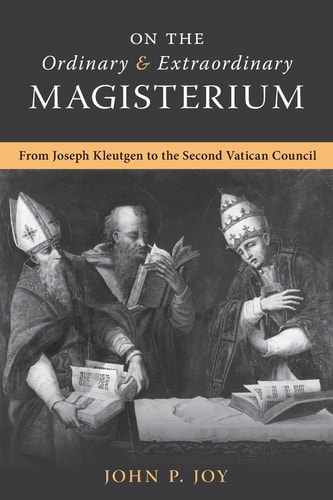
On the Ordinary and Extraordinary Magisterium: From Joseph Kleutgen to the Second Vatican Council
0
0
As an Amazon Associate and affiliate partner, Menrva Books earns from qualifying purchases. Learn more
Author Description
This book, which is now in its second edition, expels the confusion surrounding the distinction between the ordinary and the extraordinary magisterium of the Church by exposing the ambiguity inherent in the term 'ordinary magisterium'. A detailed analysis of the origins of this terminology in the writings of Joseph Kleutgen, a nineteenth century neo-scholastic theologian, provides the historical and theological context for understanding its intended sense in the documents of Pope Pius IX and the First Vatican Council. The main lines of historical development are then traced from the end of the First Vatican Council up through the teaching of the Second Vatican Council with special attention given to the question of an ordinary magisterium of the pope and to the extension of the extraordinary magisterium to the secondary object of the magisterium and to the confirmation or re-affirmation of doctrines already infallibly taught by the Church. This latter question has serious implications for the interpretation of doctrinal declarations such as those found in Evangelium vitae, Ordinatio sacerdotalis, and several of the documents of Vatican II. The study concludes by considering the approach to these questions taken by the Second Vatican Council in the constitution on the Church Lumen gentium.
Menrva's Summary
THE THESIS
This book clarifies the distinction between the ordinary and extraordinary magisterium of the Church by analyzing the historical and theological origins of the term 'ordinary magisterium'. The study begins with Joseph Kleutgen, a nineteenth-century neo-scholastic theologian, to establish the context for its use in papal documents from Pius IX and the First Vatican Council. It then traces the development of this concept through the Second Vatican Council, focusing on the pope's ordinary magisterium and the extension of the extraordinary magisterium to secondary objects and the confirmation of existing infallible teachings. The work concludes by examining the Second Vatican Council's approach to these matters in Lumen gentium, with implications for interpreting recent doctrinal declarations.
THE SCOPE MAP
- Analysis of the term 'ordinary magisterium' and its inherent ambiguities.
- Historical and theological context from Joseph Kleutgen's writings.
- Examination of the terminology's intended sense in documents of Pius IX and the First Vatican Council.
- Tracing the historical development of the magisterium from the First Vatican Council to the Second Vatican Council.
- Special attention to the pope's ordinary magisterium.
- Discussion of the extension of the extraordinary magisterium to secondary objects and confirmation of existing infallible doctrines.
- Implications for interpreting doctrinal declarations like Evangelium vitae and Ordinatio sacerdotalis.
- Consideration of the Second Vatican Council's approach in Lumen gentium.
THE AUTHORITY PERSPECTIVE
This second edition of John Joy's work is presented as a detailed scholarly analysis aimed at resolving confusion surrounding the Church's magisterium. The book's structure, moving from historical origins to contemporary implications, suggests a methodical approach to theological and historical inquiry. The focus on specific documents and theologians indicates a text intended for those with a serious interest in Catholic doctrine and its development.
Page Count:
224
Publication Date:
2023-04-24
Publisher:
Arouca Press
ISBN-10:
199068548X
ISBN-13:
9781990685484
Non-Fiction
Religion
History
Church History
Theology
Catholicism
Community Tags
Similar Books