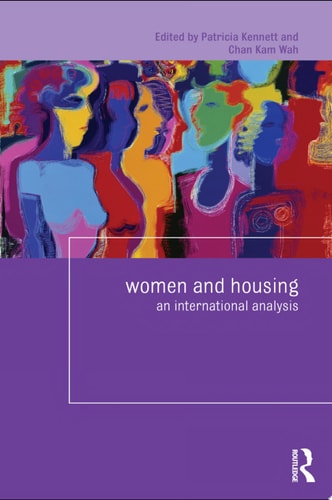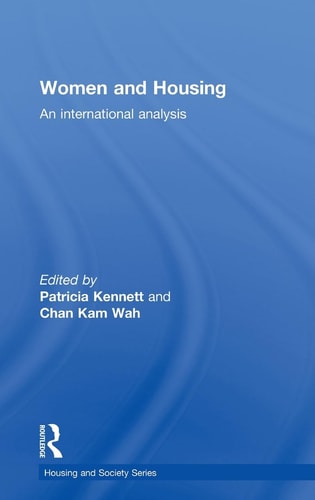
Women and Housing: An International Analysis
0
0
As an Amazon Associate and affiliate partner, Menrva Books earns from qualifying purchases. Learn more
Author Description
In the context of contemporary economic, political, social and cultural transformations, this book brings together contributions from developed and emerging societies in Europe, the USA and East Asia in order to highlight the nature, extent and impact of these changes on the housing opportunities of women. The collection seeks to contribute to comparative housing debates by highlighting the gendered nature of housing processes, locating these processes within wider structured and institutionalized relations of power, and to show how these socially constructed relationships are culturally contingent, and manifest and transform over time and space. The international contributors draw on a wide range of empirical evidence relating to labour market participation, wealth distribution, family formation and education to demonstrate the complexity and gendered nature of the interlocking arenas of production, reproduction and consumption and the implications for the housing opportunities of women in different social contexts. Worldwide examples are drawn from Australia, China, Great Britain, Hong Kong, Japan, Spain, Sweden, Taiwan and the USA.
Menrva's Summary
THE THESIS
This book investigates how contemporary global transformations impact women's housing opportunities across diverse societies. It brings together international contributors from developed and emerging economies to analyze the gendered nature of housing processes, situating them within broader power structures and cultural contexts. The analysis draws on empirical evidence concerning labor markets, wealth distribution, and family formation to illustrate the complex interplay of production, reproduction, and consumption and their effects on women's housing access worldwide.
THE SCOPE MAP
- Analysis of economic, political, social, and cultural transformations affecting housing.
- Comparative study of housing opportunities for women in Europe, the USA, and East Asia.
- Examination of the gendered nature of housing processes within power relations.
- Exploration of how socially constructed relationships are culturally contingent and evolve over time and space.
- Empirical evidence from labor market participation, wealth distribution, and family formation.
- Case studies and examples from Australia, China, Great Britain, Hong Kong, Japan, Spain, Sweden, Taiwan, and the USA.
THE AUTHORITY PERSPECTIVE
This collection offers a comparative analysis of women's housing experiences in a global context, highlighting the intersection of economic, social, and cultural changes with gendered housing outcomes. The contributors utilize a range of empirical data and case studies to demonstrate the complexity of these issues across different regions. The book aims to advance comparative housing debates by emphasizing the power dynamics and cultural specificities that shape women's access to housing. Its broad geographical scope and focus on interlocking arenas of production, reproduction, and consumption provide a comprehensive overview of the subject.
Page Count:
247
Publication Date:
2011-01-01
Publisher:
Routledge
ISBN-10:
0415548950
ISBN-13:
9780415548953
Politics
Economics
Non-Fiction
Sex Discrimination Against Women
Infrastructure
Housing
Women
Logement
Urban Studies
Gender Studies
Social Science
Sociology
Housing policy