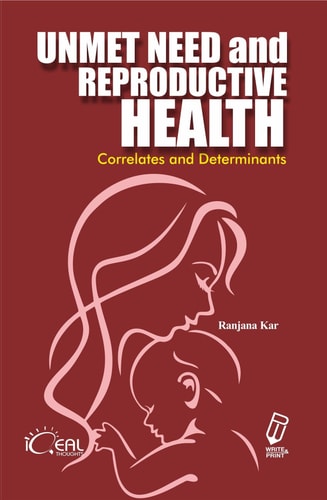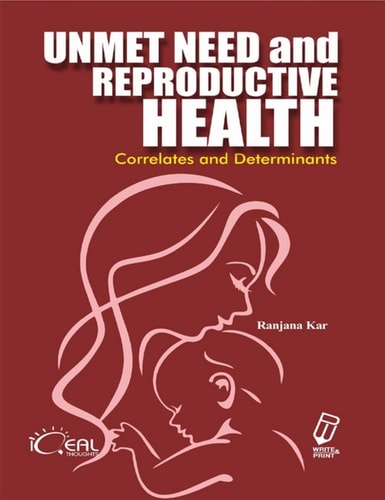
Unmet Need and Reproductive Health
0
0
As an Amazon Associate and affiliate partner, Menrva Books earns from qualifying purchases. Learn more
Author Description
The concept of unmet need points to the gap between women's reproductive intensions and their contraceptive behaviour. In doing so it poses a challenge to the reproductive health and family planning programme to reach and serve the millions of women whose reproductive attitude resemble those of contraceptive users but who, for some reasons, are not using contraception. By responding to the concerns of women with unmet need, reproductive health programmes can serve more people and serve them better. Programmes can respond best if there is a trategy that focuses on women with unmet need as a distinct audience. The present study is an application of different statistical models to study the family planning acceptance and unmet need and the burden of unintended pregnancy with a case study of Odisha using the data from the National Family Health Survey. The study while analyzing the current status of family planning acceptance, unmet need and estimation of unintended pregnancy studies to explore the underlying causes using different models. The study has also the scope of extending the methodology in other areas to develop suitable strategies for strengthening the RCH programme.
Menrva's Summary
THE THESIS
The concept of unmet need in reproductive health highlights a critical gap between women's intentions and their contraceptive practices. This gap presents a significant challenge to existing family planning programs, which must identify and serve millions of women who desire contraception but do not currently use it. By focusing on these women as a distinct audience, reproductive health programs can expand their reach and improve service delivery. This study applies various statistical models to analyze family planning acceptance, unmet need, and unintended pregnancies, using data from the National Family Health Survey with a specific case study of Odisha.
THE SCOPE MAP
- Analysis of the concept of unmet need in reproductive health.
- Examination of the gap between women's reproductive intentions and contraceptive behavior.
- Application of different statistical models to study family planning acceptance.
- Estimation and analysis of the burden of unintended pregnancy.
- Case study focusing on the state of Odisha using National Family Health Survey data.
- Exploration of the underlying causes of unmet need and unintended pregnancy.
- Methodology for strengthening Reproductive and Child Health (RCH) programs.
THE AUTHORITY PERSPECTIVE
The study applies statistical models to analyze family planning acceptance and unmet need, focusing on the burden of unintended pregnancy within the context of reproductive health programs. Its methodology is designed to be extendable to other regions, aiming to develop strategies for strengthening RCH initiatives. The research utilizes data from the National Family Health Survey, with a specific case study of Odisha, to explore the underlying causes of these reproductive health challenges. The work suggests that a targeted strategy focusing on women with unmet need as a distinct audience can improve program effectiveness and service delivery.
Page Count:
211
Publication Date:
2016-06-30
Publisher:
National Book Network
ISBN-10:
9386283409
ISBN-13:
9789386283405
Health
Science & Technology
Non-Fiction
Family planning
Public Health
Demography
Reproductive health
Community Tags
Similar Books