The Anthropological Demography of Health
0
0
As an Amazon Associate and affiliate partner, Menrva Books earns from qualifying purchases. Learn more
Author Description
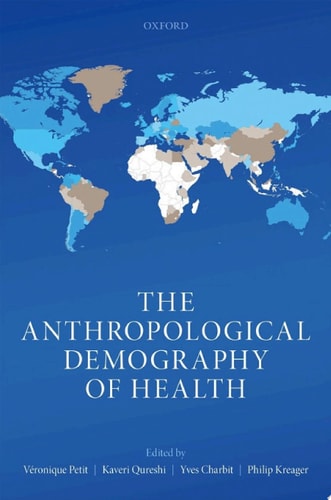
The anthropological demography of health, as a field of interdisciplinary population research, has grown from the 1990s, extending to a remarkable range of key human and policy issues, including: genetic disorders; nutrition; mental health; infant, child, and maternal morbidity; malaria; HIV/AIDS; disability and chronic diseases; new reproductive technologies; and population ageing. By observing group formation and change over time, tracking people's networks, and observing variance between what people say and do, anthropological demography goes beyond the characteristically top-down formal methodologies of most mainstream socio-economic demography and population health. This path-breaking volume charts and integrates the growing body of research that combines ethnography with quantitative models and methods in the field of population health. It offers a clear agenda based on important conceptual and methodological advances, and often working in close collaboration with medical and historical research. Approaches to population that are grounded in sustained ethnographic and historical research provide more than substantive knowledge of how cultural and social formations interact with health. They enable understanding of how local institutions and experience of vital events come to be translated into the demographic and health measures on which survey and clinical programmes rely. This, in turn, makes possible critical evaluation of the empirical adequacy of such translation, reflection on what happens when these models and measures become standardised evaluations of health statuses, and what this implies for governance. The combination of anthropological, demographic, historical, and biological research has gone beyond the initial demographic prioritisation of fertility regulation, to take on an expanded range of key health policy issues, and locate them in the context of the inequalities that so frequently give rise to major health differentials.
Menrva's Summary
THE THESIS
This volume investigates how the integration of ethnographic research with quantitative demographic methods provides a more nuanced understanding of population health than traditional top-down statistical models. The authors, Kaveri Qureshi, Véronique Petit, and Yves Charbit, draw upon decades of interdisciplinary research to argue that social and cultural contexts are essential for interpreting demographic data. By bridging the gap between clinical health measures and local human experience, the text establishes a framework for evaluating how health policies are constructed and implemented in diverse global settings.
THE SCOPE MAP
What You Will Find
- Analysis of health issues including nutrition, mental health, HIV/AIDS, and population ageing.
- Methodologies for combining ethnographic fieldwork with formal demographic modeling.
- Critical evaluation of how local institutions translate vital events into standardized health metrics.
Scope Limits
- The text does not provide a comprehensive clinical manual for treating specific diseases.
- It does not focus on purely theoretical mathematical demography without social context.
THE AUTHORITY PERSPECTIVE
Experts recognize this volume as a significant contribution to the field of anthropological demography, noting its utility in bridging the divide between qualitative social science and quantitative public health research. Readers frequently highlight the academic density of the prose, which serves as a rigorous resource for researchers and policy analysts working at the intersection of culture and health.
Page Count:
570
Publication Date:
2020-01-01
Publisher:
OUP Oxford
ISBN-10:
0192607324
ISBN-13:
9780192607324
Public Health
Sociology
Demography
Anthropology
Social Science
Sociology of Health
Medical research
DemographyPopulation
Community Tags
Similar Books