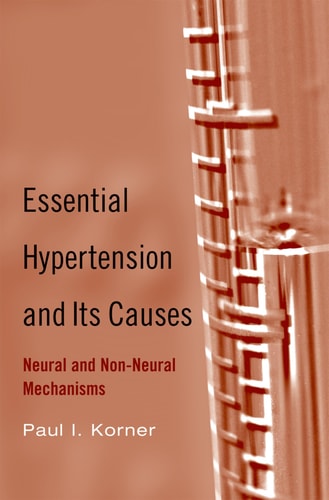
Essential Hypertension and Its Causes: Neural and Non-Neural Mechanisms
0
0
As an Amazon Associate and affiliate partner, Menrva Books earns from qualifying purchases. Learn more
Author Description
This new account of the pathogenesis of essential hypertension (EH) represents a detailed analysis of the main components of the circulatory control system. The latter's properties resemble those of man-made adaptive control systems in which regulatory parameters are altered when operating conditions exceed certain limits, often through neural mechanisms.Inheritance of EH depends on both genes and environment. The high blood pressure (BP) genes have not yet been definitively identified, whilst the main environmental causes are mental stress, high dietary salt intake and obesity. EH occurs as two major syndromes, each initiated by chronic stress: 1) Stress-and-salt related EH, and 2) Hypertensive obesity. Stress is perceived by the cortex, from which increased dopaminergic (DA) neuron activity stimulates the hypothalamic defense area, raising sympathetic neural activity (SNA) and BP. Normally these subside quickly when the stress is over, but in those susceptible to EH the DA synapses become sensitized so that the defense response is evoked by ever lower levels of stress. Sensitization is common in memory circuits, but not in autonomic neurons, so that this property in EH may be genetically determined.Stress-related hypertension increases hypothalamic responsiveness to high salt, resulting in further rises in SNA and BP. Later, non-neural functional changes (e.g. reduction in nitric oxide) and the structural remodeling of resistance vessels further enhance the vasoconstriction. In contrast, in those developing hypertensive obesity food consumption is excessive, which transiently alleviates stress-related anxiety. The brain ignores the leptin-mediated signals that normally curb appetite, contrasting with normal energy regulation in SSR-EH. In hypertensive obesity, the SNA pattern is similar to that in SSR-EH, but vasoconstriction is masked by vasodilatation and fluid retention due to hyperinsulinemia. This syndrome is a volume overload hypertension, where high cardiac
Menrva's Summary
THE THESIS
This book investigates the complex pathogenesis of essential hypertension by analyzing the interplay between neural control systems, genetic predisposition, and environmental factors. Paul I. Korner, a specialist in circulatory control, utilizes a systems-engineering framework to model how blood pressure regulation fails under chronic stress. He argues that essential hypertension is not a monolithic condition but manifests as two distinct syndromes—stress-and-salt related hypertension and hypertensive obesity—each driven by specific neurobiological and metabolic dysfunctions.
THE SCOPE MAP
What You Will Find
- A detailed analysis of the circulatory control system modeled as an adaptive control mechanism.
- Examination of the role of dopaminergic neuron sensitization in chronic stress responses.
- Comparative study of the physiological pathways in stress-and-salt related hypertension versus hypertensive obesity.
- Discussion of structural vascular remodeling and non-neural functional changes like nitric oxide reduction.
THE AUTHORITY PERSPECTIVE
Experts recognize this work as a rigorous, technical examination of the neuro-autonomic mechanisms underlying high blood pressure. Readers frequently note the academic density of the prose, which is tailored for researchers and clinicians interested in the intersection of systems biology and cardiovascular pathology.
Page Count:
720
Publication Date:
2007-05-11
Publisher:
Oxford University Press
ISBN-10:
0195094832
ISBN-13:
9780195094831
Science
Health
Categories
Hypertension
Kindle eBooks
Medicine
Physiology
Kindle Store
Cardiology
Medical
Community Tags
Other Editions(2)

Similar Books









Reader Comments
Share Your Thoughts
No comments yet. Be the first to share your thoughts!