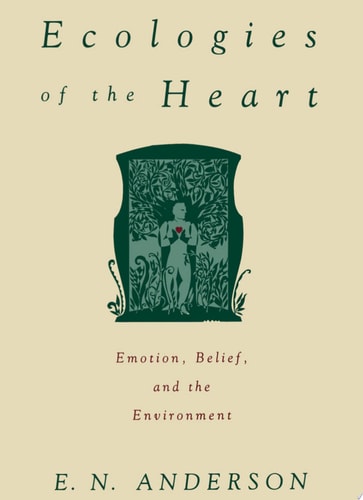
Ecologies of the Heart: Emotion, Belief, and the Environment
0
0
As an Amazon Associate and affiliate partner, Menrva Books earns from qualifying purchases. Learn more
Author Description
There is much we can learn about conservation from native peoples, says Gene Anderson. While the advanced nations of the West have failed to control overfishing, deforestation, soil erosion, pollution, and a host of other environmental problems, many traditional peoples manage their natural resources quite successfully. And if some traditional peoples mismanage the environment--the irrational value some place on rhino horn, for instance, has left this species endangered--the fact remains that most have found ways to introduce sound ecological management into their daily lives. Why have they succeeded while we have failed? In Ecologies of the Heart, Gene Anderson reveals how religion and other folk beliefs help pre-industrial peoples control and protect their resources. Equally important, he offers much insight into why our own environmental policies have failed and what we can do to better manage our resources.A cultural ecologist, Gene Anderson has spent his life exploring the ways in which different groups of people manage the environment, and he has lived for years in fishing communities in Hong Kong, Malaysia, Singapore, Tahiti, and British Columbia--as well as in a Mayan farmtown in south Mexico--where he has studied fisheries, farming, and forest management. He has concluded that all traditional societies that have managed resources well over time have done so in part through religion--by the use of emotionally powerful cultural symbols that reinforce particular resource management strategies. Moreover, he argues that these religious beliefs, while seeming unscientific, if not irrational, at first glance, are actually based on long observation of nature. To illustrate this insight, he includes many fascinating portraits of native life. He offers, for instance, an intriguing discussion of the Chinese belief system known as Feng-Shui (wind and water) and tells of meeting villagers in remote areas of Hong Kong's New Territories who assert that dragons live in the
Menrva's Summary
THE THESIS
This book investigates the correlation between traditional religious belief systems and successful long-term environmental resource management. E. N. Anderson, a seasoned cultural ecologist, draws upon decades of ethnographic fieldwork in diverse global communities to argue that cultural symbols and folk beliefs often serve as sophisticated mechanisms for ecological preservation. He posits that Western environmental policy frequently fails because it ignores the emotional and symbolic dimensions of human behavior, which traditional societies have historically integrated into their survival strategies.
THE SCOPE MAP
What You Will Find
- Comparative analysis of resource management in fishing and farming communities across Hong Kong, Malaysia, Singapore, Tahiti, and Mexico.
- Examination of the role of cultural symbols and religious frameworks in regulating human interaction with nature.
- Case studies on traditional practices, including the Chinese system of Feng Shui.
- Critical evaluation of Western environmental policy failures compared to indigenous conservation successes.
THE AUTHORITY PERSPECTIVE
Experts in cultural ecology recognize this work as a significant contribution to understanding the intersection of human belief and environmental sustainability. Readers frequently note the accessible yet scholarly nature of the prose, which bridges the gap between academic research and practical environmental application.
Page Count:
272
Publication Date:
1996-03-28
Publisher:
Oxford University Press
ISBN-10:
0195090101
ISBN-13:
9780195090109
Nature
South carolina history
Sociology
Human ecology
Cultural Anthropology
Anthropology
Ecology
Community Tags
Similar Books