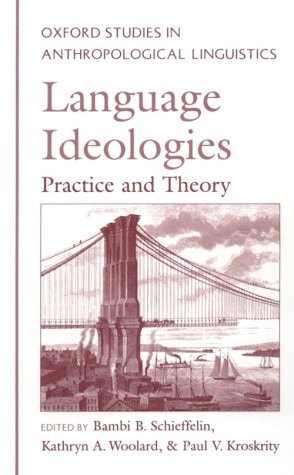
Language Ideologies: Practice and Theory
0
0
As an Amazon Associate and affiliate partner, Menrva Books earns from qualifying purchases. Learn more
Author Description
"Language ideologies" are cultural representations, whether explicit or implicit, of the intersection of language and human beings in a social world. Mediating between social structures and forms of talk, such ideologies are not only about language. Rather, they link language to identity, power, aesthetics, morality and epistemology. Through such linkages, language ideologies underpin not only linguistic form and use, but also significant social institutions and fundamental nottions of person and community.The essays in this new volume examine definitions and conceptions of language in a wide range of societies around the world. Contributors focus on how such defining activity organizes language use as well as institutions such as religious ritual, gender relations, the nation-state, schooling, and law. Beginning with an introductory survey of language ideology as a field of inquiry, the volume is organized in three parts. Part I, "Scope and Force of Dominant Conceptions of Language," focuse on the propensity of cultural models of language developed in one social domain to affect linguistic and social behavior across domains. Part II, "Language Ideology in Institutions of Power," continues the examination of the force of specific language beliefs, but narrows the scope to the central role that language ideologies play in the functioning of particular institutions of power such as schooling, the law, or mass media. Part III, "Multiplicity and Contention among Ideologies," emphasizes the existence of variability, contradiction, and struggles among ideologies within any given society. This will be the first collection of work to appear in this rapidly growing field, which bridges linguistic and social theory. It will greatly interest linguistic anthropologists, social and cultural anthropologists, sociolinguists, historians, cultural studies, communications, and folklore scholars.
Menrva's Summary
THE THESIS
This volume investigates how cultural representations of language—termed language ideologies—mediate the relationship between social structures and linguistic practice. The editors, Bambi B. Schieffelin, Kathryn A. Woolard, and Paul V. Kroskrity, compile a series of essays that analyze how beliefs about language shape identity, power, morality, and social institutions. By bridging linguistic and social theory, the text provides a framework for understanding how language use is organized and constrained by cultural models across diverse global societies.
THE SCOPE MAP
What You Will Find
- A comprehensive survey of language ideology as a field of inquiry within anthropological linguistics.
- Analysis of how cultural models of language influence behavior across different social domains.
- Examination of the role of language beliefs in institutions such as law, schooling, and mass media.
- Discussion of the variability and contention among competing ideologies within a single society.
THE AUTHORITY PERSPECTIVE
Experts recognize this volume as a foundational text for the study of language ideologies, frequently citing it for its interdisciplinary approach to linguistic and social theory. Readers often note the academic density of the prose, which makes it a primary resource for researchers in anthropology, sociolinguistics, and cultural studies.
Page Count:
352
Publication Date:
1998-05-28
Publisher:
Oxford University Press
ISBN-10:
0195105613
ISBN-13:
9780195105612
Anthropology
Social Science
Language And Culture
Linguistics
Ideology
Community Tags
Similar Books