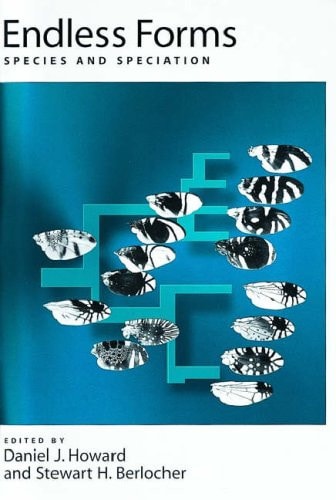
Endless Forms: Species and Speciation
0
0
As an Amazon Associate and affiliate partner, Menrva Books earns from qualifying purchases. Learn more
Author Description
Speciation is one of the great themes of evolutionary biology. It is the process through which new species are born and diversity generated. Yet for many years our understanding of the process consisted of little more than a perception that if populations are isolated geographically, they will diverge genetically and may come to form new species. This situation began to change in the 1960s as an increasing number of biologists challenged the exclusivity of allopatric speciation and began to probe more deeply into the actual process by which divergence occurs and reproductive isolation is acquired. This focus on process led to many new insights, but numerous questions remain and speciation is now one of the most dynamic areas of research in modern evolutionary biology. This volume presents the newest research findings on speciation bringing readers up to day on species concepts, modes of speciation, and the nature of reproductive barriers. It also discusses the forces that drive divergence of populations, the genetic control of reproductive isolation, and the role played by hybrid zones and hybridization in speciation.
Menrva's Summary
THE THESIS
This volume investigates the complex mechanisms of speciation, addressing the core question of how new species emerge and maintain reproductive isolation in a changing biological landscape. Editors Daniel J. Howard and Stewart H. Berlocher compile contributions from leading researchers to move beyond traditional allopatric models. The text synthesizes modern genetic data and field observations to provide a comprehensive framework for understanding the divergence of populations and the formation of reproductive barriers.
THE SCOPE MAP
What You Will Find
- Analysis of contemporary species concepts and their application in modern research.
- Examination of the genetic control mechanisms underlying reproductive isolation.
- Investigation into the role of hybrid zones and hybridization in the speciation process.
- Evaluation of the various modes of speciation beyond simple geographic isolation.
THE AUTHORITY PERSPECTIVE
Experts recognize this volume as a significant reference for researchers and graduate students focusing on evolutionary mechanisms. Readers frequently note the technical density of the prose, which assumes a foundational understanding of genetics and evolutionary theory.
Page Count:
496
Publication Date:
1998-12-03
Publisher:
Oxford University Press
ISBN-10:
0195109007
ISBN-13:
9780195109009
Science
Evolution
Evolutionary Biology
Genetics
Academic
Species
Biology
Community Tags
Similar Books