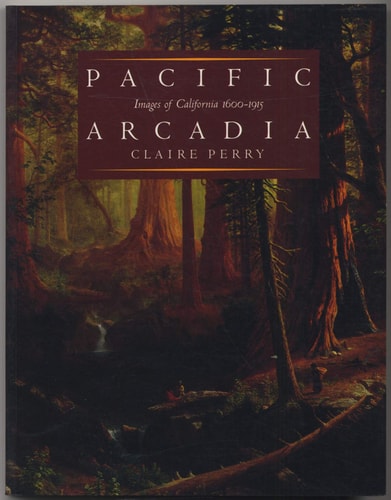
Pacific Arcadia: Images of California, 1600-1915
0
0
As an Amazon Associate and affiliate partner, Menrva Books earns from qualifying purchases. Learn more
Author Description
Since the arrival of the Spanish explorers in the sixteenth century, California has been thought of as a land of promise and opportunity. This lavishly illustrated catalog, which is to accompany a major exhibit opening in April 1999 at Stanford's Iris and B. Gerald Cantor Center for Visual Arts and traveling subsequently to two other museums, presents a fascinating cultural history of an idyllic vision of California that still figures prominently in the American imagination. Brought together in one show for the first time, this combination of art is unique in its range from high art to popular representations. Currier and Ives lithographs and the work of early European cartographers are juxtaposed with photographs by Carleton E. Watkins, Arnold Genthe, and Eadweard Muybridge, and paintings by Albert Bierstadt, James Walker, and William Hahn, among others. With one hundred and fifty plates--sixty in full color--Pacific Arcadia illuminates the imagery of the California Dream.Perry investigates how and why this vision of a Pacific paradise was developed and marketed to the public, taking as her subject the images produced by early visitors and residents confronted by the peculiarities of California's landscape, the abundance of its natural resources, and the omnipresence of the vast Pacific. Using paintings, drawings, maps, photographs, newspaper and book illustrations, and printed ephemera dating from the seventeenth century to 1915, Pacific Arcadia examines the ways these images represented California as a place where economic bliss could be attained in a spectacular natural setting.
Menrva's Summary
THE THESIS
This work investigates how the visual representation of California as an idyllic, resource-rich paradise was constructed and marketed to the public between 1600 and 1915. Claire Perry, an expert in American art history, utilizes a diverse collection of visual media to argue that these images were not merely descriptive but were intentional tools used to promote the concept of the California Dream. By analyzing the intersection of high art and popular culture, the book demonstrates how early explorers, artists, and photographers shaped the American perception of the Pacific coast as a site of inevitable economic and natural prosperity.
THE SCOPE MAP
What You Will Find
- A comprehensive analysis of visual media including paintings, maps, lithographs, and early photography.
- A chronological examination of California imagery from the arrival of Spanish explorers through the early twentieth century.
- Case studies of prominent artists and photographers such as Albert Bierstadt, Carleton E. Watkins, and Eadweard Muybridge.
- An exploration of the socio-economic factors that influenced the marketing of California as a land of opportunity.
THE AUTHORITY PERSPECTIVE
Experts and historians frequently cite this volume as a foundational resource for understanding the visual rhetoric of the American West. Readers often note the high quality of the plates and the clarity with which the author connects artistic trends to broader cultural myths.
Page Count:
256
Publication Date:
1999-04-29
Publisher:
Oxford University Press
ISBN-10:
0195109376
ISBN-13:
9780195109375
Photography
Art american
California history
Art History
Landscape Painting
Community Tags
Similar Books