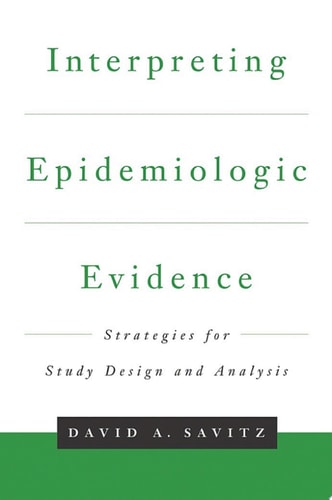
Interpreting Epidemiologic Evidence: Strategies for Study Design and Analysis
0
0
As an Amazon Associate and affiliate partner, Menrva Books earns from qualifying purchases. Learn more
Author Description
Evaluating the strength or persuasiveness of epidemiologic evidence is inherently challenging, both for those new to the field and for experienced researchers. There are a myriad of potential biases to consider, but little guidance about how to asses the likely impact on study results. This book offers a strategy for assessing epidemiologic research findings, explicitly describing the goals and products of epidemiologic research in order to better evaluate it successes and limitations. The focus throughout is on practical tools for making optimal use of available data to assess whether hypothesized biases are operative and to anticipate concerns at the point of study design in order to ensure that needed information is generated. Specific tools for assessing the presence and impact of selection bias in both cohort and case-control studies, bias from non-response, confounding, exposure measurement error, disease measurement error, and random error are identified and evaluated. The potential value of each approach as well as its limitations are discussed, using examples from the published literature. Such information should help those who generate and interpret epidemiologic research to apply methodological principles more effectively to substantive issues, leading to a more accurate appraisal of the current evidence and greater clarity about research needs.
Menrva's Summary
THE THESIS
This book investigates the core challenge of evaluating the strength and validity of epidemiologic evidence by providing a structured strategy for assessing research findings. Author David A. Savitz, a prominent epidemiologist, draws upon his extensive academic and practical experience to bridge the gap between theoretical methodology and real-world application. He presents a framework designed to help researchers identify potential biases and limitations in study design, ultimately aiming to improve the accuracy of scientific appraisal and the clarity of future research objectives.
THE SCOPE MAP
What You Will Find
- Methodological frameworks for evaluating cohort and case-control study designs.
- Practical tools for quantifying the impact of selection bias and confounding variables.
- Analytical techniques for addressing exposure and disease measurement errors.
- Case studies derived from published literature to illustrate the application of bias assessment.
THE AUTHORITY PERSPECTIVE
Experts and researchers frequently cite this work as a foundational resource for navigating the complexities of epidemiologic study design. Readers often note the technical density of the prose, which serves as a rigorous guide for professionals and advanced students in the field of public health.
Page Count:
321
Publication Date:
2001-06-15
Publisher:
Oxford University Press
ISBN-10:
019510840X
ISBN-13:
9780195108408
Science
Research Methods
Statistics
Public Health
Epidemiology
Medicine
Community Tags
Similar Books