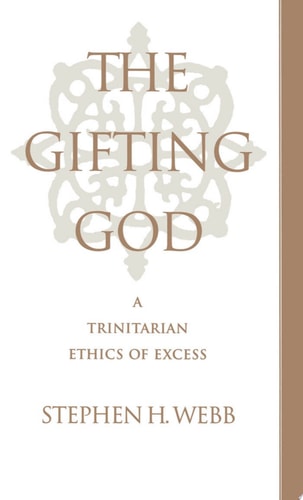
The Gifting God: A Trinitarian Ethics of Excess
0
0
As an Amazon Associate and affiliate partner, Menrva Books earns from qualifying purchases. Learn more
Author Description
Theories of generosity, or gift giving, are becoming increasingly important in recent work in philosophy and religion. Stephen Webb seeks to build on this renewed interest by surveying a distinctively modern and postmodern approach to the issue of generosity, and then developing a theological framework for it. He analyzes two basic forms of such theories: theories of excess, which emphasize the extravagance of the giving act, and theories of exchange, which look at giving as a form of reciprocity. Excess, which Webb calls "squandering," is disconnected from considerations of morality and community. Similarly, giving as exchange reduces generosity to mere calculations of the market. Webb contends that for this reason, in many ways, society has become suspicious of charity and generosity. This cynicism has led to quick and easy judgments that, in turn, have led to a new orthodoxy with its own troubling consequences. Webb argues that we need to recover the generosity that our culture obscures behind this monologue on self-interest, and that theology, as a form of critical thought, can play a helpful role. Through the example of a trinitarian God, who is the Giver, the Given, and the Giving, he demonstrates how giving can be born of excess but bound by a community of responsibility and mutuality - other-oriented without being self-negating. He maintains that the generosity of God's grace, properly understood, can reorient our own idea of the gift and must be correlated to our own practices of exchange and reciprocity.
Menrva's Summary
THE THESIS
Stephen H. Webb investigates whether a trinitarian theological framework can reconcile the tension between theories of excessive generosity and theories of reciprocal exchange. Drawing upon his background in systematic theology and philosophy, Webb critiques modern and postmodern interpretations of charity that often reduce giving to either reckless squandering or market-based transactions. He argues that by re-examining the nature of the Trinity as the Giver, the Given, and the Giving, one can establish a model of generosity that is both extravagant and grounded in communal responsibility.
THE SCOPE MAP
What You Will Find
- A comparative analysis of theories of excess versus theories of exchange in contemporary philosophy.
- A theological critique of modern cynicism regarding charity and self-interest.
- An exploration of the Trinity as a foundational model for human ethical practice.
- A proposed framework for balancing other-oriented generosity with mutuality and responsibility.
THE AUTHORITY PERSPECTIVE
Scholars and theologians frequently cite this work as a significant contribution to the intersection of gift theory and Christian ethics. Readers often note the academic density of the prose, which requires a foundational understanding of both trinitarian theology and contemporary philosophical discourse.
Page Count:
200
Publication Date:
1996-04-18
Publisher:
Oxford University Press
ISBN-10:
019510255X
ISBN-13:
9780195102550
Religion
Philosophy
Christianity
Trinity
Theology
Moral and ethical aspects
Ethics
Community Tags
Similar Books