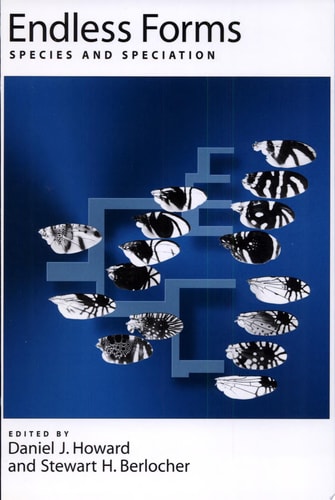
Endless Forms: Species and Speciation (Linguistics, and Culture)
0
0
As an Amazon Associate and affiliate partner, Menrva Books earns from qualifying purchases. Learn more
Author Description
Speciation is one of the great themes of evolutionary biology. It is the process through which new species are born and diversity generated. Yet for many years our understanding of the process consisted of little more than a perception that if populations are isolated geographically, they will diverge genetically and may come to form new species. This situation began to change in the 1960s as an increasing number of biologists challenged the exclusivity of allopatric speciation and began to probe more deeply into the actual process by which divergence occurs and reproductive isolation is acquired. This focus on process led to many new insights, but numerous questions remain and speciation is now one of the most dynamic areas of research in modern evolutionary biology. This volume presents the newest research findings on speciation bringing readers up to day on species concepts, modes of speciation, and the nature of reproductive barriers. It also discusses the forces that drive divergence of populations, the genetic control of reproductive isolation, and the role played by hybrid zones and hybridization in speciation.
Menrva's Summary
THE THESIS
This volume investigates the mechanisms of speciation and the processes by which reproductive isolation emerges within biological populations. Editors Daniel J. Howard and Stewart H. Berlocher compile research from leading biologists to challenge traditional allopatric models. The text provides a comprehensive framework for understanding how genetic divergence and environmental factors interact to generate biodiversity in the modern era.
THE SCOPE MAP
What You Will Find
- Analysis of contemporary species concepts and their application in evolutionary research
- Examination of reproductive barriers and the genetic control of isolation
- Discussion of hybrid zones and the role of hybridization in the formation of new species
- Evaluation of the forces driving population divergence beyond simple geographic isolation
THE AUTHORITY PERSPECTIVE
Experts recognize this volume as a significant collection of research that bridges the gap between classical evolutionary theory and modern genetic inquiry. Readers frequently note the academic density of the prose, making it a primary resource for students and researchers in the field of evolutionary biology.
Page Count:
496
Publication Date:
1998-12-03
Publisher:
Oxford University Press
ISBN-10:
0195109015
ISBN-13:
9780195109016
Science
Species
Academic
Biology
Evolution
Genetics
Evolutionary Biology
Community Tags
Similar Books