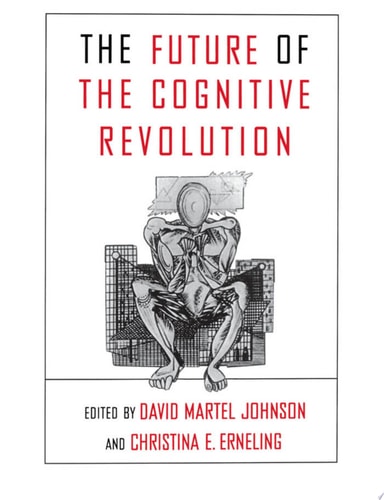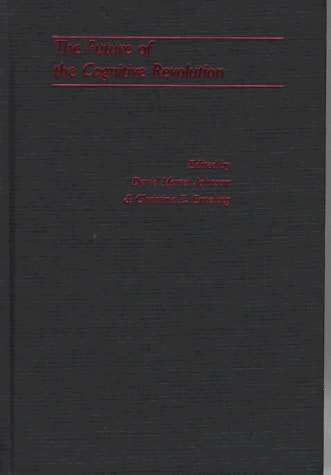
The Future of the Cognitive Revolution
0
0
As an Amazon Associate and affiliate partner, Menrva Books earns from qualifying purchases. Learn more
Author Description
The basic idea of the particular way of understanding mental phenomena that has inspired the "cognitive revolution" is that, as a result of certain relatively recent intellectual and technological innovations, informed theorists now possess a more powerfully insightful comparison or model for mind than was available to any thinkers in the past. The model in question is that of software, or the list of rules for input, output, and internal transformations by which we determine and control the workings of a computing machine's hardware. Although this comparison and its many implications have dominated work in the philosophy, psychology, and neurobiology of mind since the end of the Second World War, it now shows increasing signs of losing its once virtually unquestioned preeminence. Thus we now face the question of whether it is possible to repair and save this model by means of relatively inessential "tinkering", or whether we must reconceive it fundamentally and replace it with something different. In this book, twenty-eight leading scholars from diverse fields of "cognitive science"-linguistics, psychology, neurophysiology, and philosophy- present their latest, carefully considered judgements about what they think will be the future course of this intellectual movement, that in many respects has been a watershed in our contemporary struggles to comprehend that which is crucially significant about human beings. Jerome Bruner, Noam Chomsky, Margaret Boden, Ulric Neisser, Rom Harre, Merlin Donald, among others, have all written chapters in a non-technical style that can be enjoyed and understood by an inter-disciplinary audience of psychologists, philosophers, anthropologists, linguists, and cognitive scientists alike.
Menrva's Summary
THE THESIS
This volume investigates whether the computational model of the mind, which has defined the cognitive revolution, remains viable or requires a fundamental paradigm shift. Edited by Christina E. Erneling and David T. Johnson, the book compiles contributions from twenty-eight prominent scholars across linguistics, psychology, and philosophy. The authors examine the historical dominance of the software-hardware metaphor and evaluate whether current limitations in cognitive science necessitate a complete theoretical overhaul or merely incremental adjustments.
THE SCOPE MAP
What You Will Find
- Critical analysis of the computational theory of mind and its historical development since World War II.
- Interdisciplinary perspectives from leading figures including Noam Chomsky, Jerome Bruner, and Margaret Boden.
- Evaluation of the limitations of the software-hardware analogy in explaining human mental phenomena.
- Theoretical proposals for the future trajectory of cognitive science research.
THE AUTHORITY PERSPECTIVE
Experts recognize this collection as a significant interdisciplinary dialogue that captures a pivotal moment of transition in cognitive studies. Readers frequently note the accessibility of the prose, which allows scholars from diverse fields to engage with complex philosophical and neurobiological arguments without excessive technical jargon.
Page Count:
416
Publication Date:
1997-04-24
Publisher:
Oxford University Press
ISBN-10:
0195103335
ISBN-13:
9780195103335
Philosophy
Science
Psychology
Linguistics
Cognition
Information Processing
Neuroscience
Community Tags
Similar Books