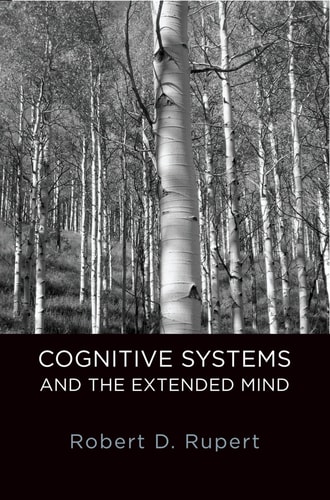
Cognitive Systems and the Extended Mind
0
0
As an Amazon Associate and affiliate partner, Menrva Books earns from qualifying purchases. Learn more
Author Description
Cognitive Systems and the Extended Mind surveys philosophical issues raised by the situated movement in cognitive science, that is, the treatment of cognitive phenomena as the joint products of brain, body, and environment. The book focuses primarily on the hypothesis of extended cognition, which asserts that human cognitive processes literally comprise elements beyond the boundary of the human organism. Rupert argues that the only plausible way in which to demarcate cognitions is systems-based: cognitive states or processes are the states of the integrated set of mechanisms and capacities that contribute causally and distinctively to the production of cognitive phenomena--for example, language-use, memory, decision-making, theory construction, and, more importantly, the associated forms of behavior. Rupert argues that this integrated system is most likely to appear within the boundaries of the human organism. He argues that the systems-based view explains the existing successes of cognitive psychology and cognate fields in a way that extended conceptions of cognition do not, and that once the systems-based view has been adopted, it is especially clear how extant arguments in support of the extended view go wrong.Cognitive Systems and the Extended Mind also examines further aspects of the situated program in cognitive science, including the embedded and embodied approaches to cognition. Rupert asks to what extent the plausible incarnations of these situated views depart from orthodox, computational cognitive science. Here, Rupert focuses on the notions of representation and computation, arguing that the embedded and embodied views do not constitute the radical shifts in perspective they are often claimed to be. Rupert also argues that, properly understood, the embodied view does not offer a new role for the body, different in principle from the one presupposed by orthodox cognitive science.
Menrva's Summary
THE THESIS
This book investigates whether human cognitive processes are confined to the biological brain or if they extend into the body and the external environment. Robert D. Rupert, a professor of philosophy, utilizes a systems-based framework to evaluate the hypothesis of extended cognition. He argues that cognitive states are best defined by the integrated mechanisms that causally contribute to behavior, ultimately contending that these systems remain primarily bounded within the human organism. By contrasting this view with embodied and embedded approaches, the author seeks to clarify the boundaries of cognitive science.
THE SCOPE MAP
What You Will Find
- A critical analysis of the hypothesis of extended cognition.
- A systems-based methodology for demarcating cognitive processes.
- Comparisons between orthodox computational cognitive science and situated cognition.
- Evaluations of the roles of representation and computation in modern cognitive theory.
THE AUTHORITY PERSPECTIVE
Experts recognize this work as a rigorous and systematic critique of the situated cognition movement. Readers frequently note the academic density of the prose, which is intended for scholars and advanced students of philosophy and cognitive science.
Page Count:
288
Publication Date:
2009-08-19
Publisher:
Oxford University Press
ISBN-10:
0195379454
ISBN-13:
9780195379457
Psychology
Non-Fiction
Philosophy
Politics
Consciousness & Thought
Epistemology
Categories
Words Language & Grammar
Linguistics
Reference
Kindle eBooks
Cognitive
Kindle Store
Cognition
Community Tags
Other Editions(3)

Similar Books






Reader Comments
Share Your Thoughts
No comments yet. Be the first to share your thoughts!