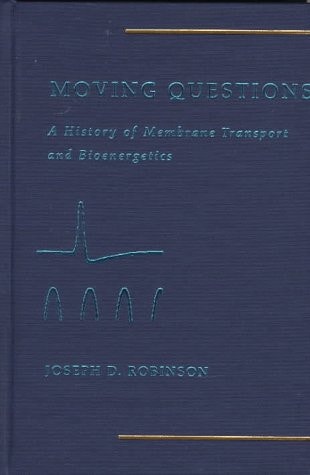
Moving Questions: A History of Membrane Transport and Bioenergetics
0
0
As an Amazon Associate and affiliate partner, Menrva Books earns from qualifying purchases. Learn more
Author Description
This book describes half a century of progress in two mainstream areas of biological research: membrane transport, initially a focus of physiologists, and oxidative phosphorylation, initially a focus of biochemists. Robinson shows how the development of new explanatory models had unexpectedly merged these inquiries into a new field, bioenergetics. In the late 1930s, explanations for the asymmetric distribution of ions between cells and their environments invoked absolute impermeabilities of the cell's surrounding membranes. But new experiments contradicted that idea and demonstrated that forming the transmembrane distributions required metabolic energy, implying the participation of active transport "pumps." Subsequent studies identified, isolated, and characterized these pumps as enzymes coupling ionic transport to the consumption of adenosine triphosphate (ATP), an "energy-rich" molecule serving as a cellular energy store. In the late 1930s oxidative phosphylation, the process of coupling ATP synthesis to oxidative metabolism, was identified. The explanatory model emerging in the next decades, however, did not follow the enzymatic precedents of known metabolic phosphorylations but rather embodied the principle that metabolic oxidations drive active transport pumps to create transmembrane distribution of ions, with these ionic asymmetries then driving ATP synthesis. It was discovered that ATP consumption can form ionic asymmetries; ionic asymmetries can drive ATP formation; and ionic asymmetries-like ATP-can also power other cellular functions.
Menrva's Summary
THE THESIS
This book investigates the historical convergence of membrane transport research and oxidative phosphorylation into the unified field of bioenergetics. Joseph D. Robinson, drawing on his extensive background in the field, traces the evolution of scientific understanding regarding how cells manage energy and ion distribution. He examines the transition from early theories of membrane impermeability to the discovery of ATP-coupled transport pumps and the complex mechanisms of metabolic energy conversion. The text provides a rigorous account of how these two distinct biological inquiries merged to form the modern framework of bioenergetics.
THE SCOPE MAP
What You Will Find
- A detailed historical analysis of biological research spanning five decades.
- Examination of the transition from absolute membrane impermeability models to active transport pump theories.
- Technical discussion of the coupling between ionic transport and adenosine triphosphate (ATP) consumption.
- Synthesis of the mechanisms governing oxidative phosphorylation and transmembrane ion distribution.
THE AUTHORITY PERSPECTIVE
Experts recognize this work as a comprehensive historical record of the development of bioenergetics. Readers frequently note the technical density of the prose, which is best suited for those with a foundational understanding of biochemistry and cellular physiology.
Page Count:
373
Publication Date:
1997-01-15
Publisher:
Oxford University Press
ISBN-10:
0195105648
ISBN-13:
9780195105643
Science
Biology
Biochemistry
Physiology
Bioenergetics
Community Tags
Similar Books