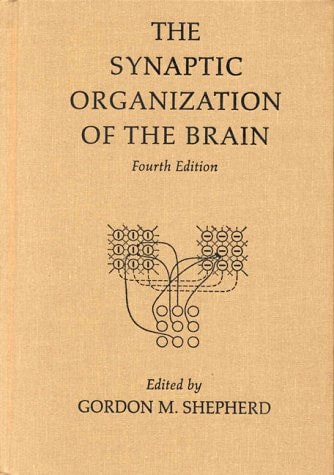
The Synaptic Organization of the Brain
0
0
As an Amazon Associate and affiliate partner, Menrva Books earns from qualifying purchases. Learn more
Author Description
Leading neuroscience authorities have joined together in this book to provide state-of-the-art accounts of the neural elements, synaptic connections, basic circuits, physiology, pharmacology, dendritic properties and functional implications of brain structures, A new chapter on the cochlear nucleus describes the neural basis of audition and supplements the analyses of vision in the retina, lateral geniculate and visual cortex, and of olfaction in the olfactory bulb and cortex. Chapters on the spinal cord, cerebellum and basal ganglia provide insight into the neural basis of sensorimotor integration. The material on the hippocampus is a new synthesis of the anatomy and physiology related to learning and memory. New research incorporated through the chapters includes: recent studies of backpropagating impulses and active properties of dendrites; the increasing evidence for specific receptor and channel subunits and their properties; neuronal modeling; and emerging data for the existence of canonical synaptic circuits mediating the information processing underlying behavior and cognition. The book will be essential reading for experimental and computational neuroscientists, neuropharmacologists, and cognitive neuroscientists, as well as undergraduate, graduate, and medical students studying brain organization and brain function.
Menrva's Summary
THE THESIS
This text investigates the fundamental synaptic organization and functional circuitry of the mammalian brain to explain how neural architecture supports complex behavior and cognition. Gordon Shepherd, a prominent figure in neuroscience, synthesizes contributions from leading authorities to provide a comprehensive analysis of neural elements and synaptic connections. The book integrates anatomical, physiological, and pharmacological data to map the functional implications of various brain structures. By examining specific systems such as the visual cortex, olfactory bulb, and hippocampus, the text establishes a framework for understanding how cellular properties translate into systemic information processing.
THE SCOPE MAP
What You Will Find
- Detailed analysis of neural circuits in the spinal cord, cerebellum, and basal ganglia.
- Examination of dendritic properties, including backpropagating impulses and active signaling.
- Integration of neuronal modeling and data on receptor and channel subunits.
- Comparative studies of sensory systems, including audition, vision, and olfaction.
THE AUTHORITY PERSPECTIVE
Experts recognize this work as a foundational text for students and researchers in experimental and computational neuroscience. Readers frequently note the high density of technical information and the rigorous academic approach to brain organization.
Page Count:
638
Publication Date:
1998-01-15
Publisher:
Oxford University Press
ISBN-10:
0195118235
ISBN-13:
9780195118230
Science
Psychology
Neuroscience
Medicine
Biology
Synapses
Brain
Community Tags
Similar Books