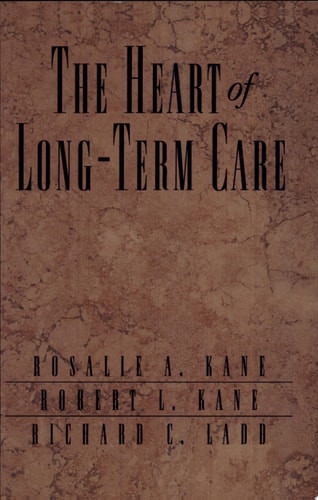
The Heart of Long-Term Care
0
0
As an Amazon Associate and affiliate partner, Menrva Books earns from qualifying purchases. Learn more
Author Description
Long-term care in the United States has taken the nursing home as its benchmark, but the monetary, social, and psychological costs of nursing home care are all too high. This book challenges the current dominance of nursing homes as the principal institution of long-term care. It offers a series of alternative models where both services and housing can be provided in a way that allows long-term consumers to enjoy dignified, "normal" lifestyles. It addresses the political and economic consequences of making this decision.The authors start with the premise that long-term care is designed to assist people who lack the capacity to function fully independently. They argue that no disabled person of any age should be required to forsake his/her humanity in exchange for care. The book rejects the artificial dichotomy between social and medical care, asserting that both play important roles in psychological and physical well-being of long-term care patients. The authors consider the need for competent and compassionate medicine and discuss the methods for improving both its coordination of care and its effectiveness. The book redefines the meaning of safety and protection in long-term care, and how this goal can be accomplished without sacrificing quality of living.As the new millennium and the aging of baby boomers approaches, more creative approaches to providing better long-term care are required. This volume outlines a useful framework for the provision of effective and humane community-based programs that are both feasible and affordable. It will be an invaluable guide for geriatricians, public health professionals, family physicians, nurses and others who care for elderly patients.
Menrva's Summary
THE THESIS
This book investigates the systemic reliance on nursing homes as the primary model for long-term care and proposes a shift toward more humane, community-based alternatives. The authors, Richard C. Ladd and Robert and Rosalie Kane, utilize their extensive expertise in health policy and gerontology to critique the current institutional framework. They argue that the existing system prioritizes medical oversight at the expense of personal dignity and quality of life. By integrating social and medical care models, the authors present a strategy for creating affordable, effective, and compassionate care environments for aging populations.
THE SCOPE MAP
What You Will Find
- Analysis of the economic and social costs associated with traditional nursing home models.
- Frameworks for integrating housing and support services to promote independent living.
- Evaluation of the political and financial barriers to reforming long-term care systems.
- Methodologies for improving the coordination and effectiveness of geriatric medical care.
THE AUTHORITY PERSPECTIVE
Experts in public health and geriatrics recognize this work as a significant contribution to the discourse on institutional reform. Readers frequently note the clarity with which the authors bridge the gap between complex policy requirements and the practical needs of elderly patients.
Page Count:
328
Publication Date:
1998-09-15
Publisher:
Oxford University Press
ISBN-10:
0195122380
ISBN-13:
9780195122381
Health
Social Science
Gerontology
Older people
Nursing
Public Health
Community Tags
Similar Books