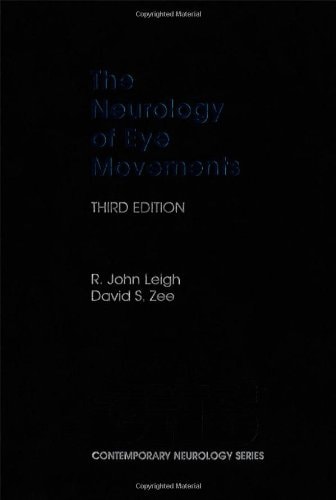
The Neurology of Eye Movements
0
0
As an Amazon Associate and affiliate partner, Menrva Books earns from qualifying purchases. Learn more
Author Description
The Neurology of Eye Movements provides clinicians with a synthesis of current scientific information that can be applied to the diagnosis and treatment of disorders of ocular motility. Basic scientists will also benefit from descriptions of how data from anatomical, electrophysiological, pharmacological, and imaging studies can be directly applied to the study of disease. By critically reviewing such basic studies, the authors build a conceptual framework that can be applied to the interpretation of abnormal ocular motor behavior at the bedside. These syntheses are summarized in displays, new figures, schematics and tables. Early chapters discuss the visual need and neural basis for each functional class of eye movements. Two large chapters deal with the evaluation of double vision and systematically evaluate how many disorders of the central nervous system affect eye movements. This edition has been extensively rewritten, and contains many new figures and an up-to-date section on the treatment of abnormal eye movements such as nystagmus. A major innovation has been the development of an option to read the book from a compact disc, make use of hypertext links (which bridge basic science to clinical issues), and view the major disorders of eye movements in over 60 video clips. This volume will provide pertinent, up-to-date information to neurologists, neuroscientists, ophthalmologists, visual scientists, otalaryngologists, optometrists, biomedical engineers, and psychologists.
Menrva's Summary
THE THESIS
This text investigates the complex neural mechanisms governing ocular motility and provides a clinical framework for diagnosing and treating disorders of eye movement. The authors, David S. Zee and R. John Leigh, synthesize extensive data from anatomical, electrophysiological, and pharmacological research to bridge the gap between basic science and bedside practice. By integrating these diverse fields, the book establishes a systematic approach for clinicians to interpret abnormal ocular motor behavior in patients.
THE SCOPE MAP
What You Will Find
- Comprehensive analysis of the neural basis for various functional classes of eye movements.
- Systematic evaluation protocols for double vision and central nervous system disorders affecting ocular motor function.
- Integration of anatomical, electrophysiological, and imaging data to explain disease pathology.
- Multimedia resources including over 60 video clips and hypertext links connecting basic science to clinical application.
THE AUTHORITY PERSPECTIVE
Experts and clinicians widely recognize this work as a foundational text for understanding the intersection of neurology and ophthalmology. Readers frequently note the high level of technical detail and the utility of the integrated multimedia components for visualizing complex motor disorders.
Page Count:
646
Publication Date:
1999-05-15
Publisher:
Oxford University Press
ISBN-10:
0195129733
ISBN-13:
9780195129731
Neuroscience
Clinical Reference
Ophthalmology
Eye Movements
Medicine
Neurology
Community Tags
Other Editions(5)


Similar Books














Reader Comments
Share Your Thoughts
No comments yet. Be the first to share your thoughts!