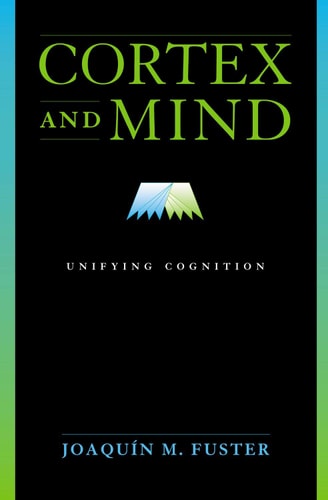
Cortex and Mind: Unifying Cognition
0
0
As an Amazon Associate and affiliate partner, Menrva Books earns from qualifying purchases. Learn more
Author Description
This book presents a unique synthesis of the current neuroscience of cognition by one of the world's authorities in the field. The guiding principle to this synthesis is the tenet that the entirety of our knowledge is encoded by relations, and thus by connections, in neuronal networks of our cerebral cortex. Cognitive networks develop by experience on a base of widely dispersed modular cell assemblies representing elementary sensations and movements. As they develop cognitive networks organize themselves hierarchically by order of complexity or abstraction of their content. Because networks intersect profusely, sharing commong nodes, a neuronal assembly anywhere in the cortex can be part of many networks, and therefore many items of knowledge. All cognitive functions consist of neural transactions within and between cognitive networks. After reviewing the neurobiology and architecture of cortical networks (also named cognits), the author undertakes a systematic study of cortical dynamics in each of the major cognitive functions--perception, memory, attention, language, and intelligence. In this study, he makes use of a large body of evidence from a variety of methodologies, in the brain of the human as well as the nonhuman primate. The outcome of his interdisciplinary endeavor is the emergence of a structural and dynamic order in the cerebral cortex that, though still sketchy and fragmentary, mirrors with remarkable fidelity the order in the human mind.
Menrva's Summary
THE THESIS
This book investigates the fundamental question of how the cerebral cortex organizes neuronal networks to produce the complex functions of the human mind. Joaquin M. Fuster, a distinguished neuroscientist, utilizes his extensive background in cortical research to propose a unifying framework where knowledge is encoded through interconnected neuronal assemblies, or 'cognits.' By synthesizing neurobiological data with cognitive theory, he argues that the hierarchical structure of these networks mirrors the architecture of human thought and intelligence.
THE SCOPE MAP
What You Will Find
- A detailed examination of the neurobiology and architecture of cortical networks.
- A systematic analysis of major cognitive functions including perception, memory, attention, language, and intelligence.
- Integration of empirical evidence from both human and nonhuman primate brain studies.
- A theoretical model explaining how modular cell assemblies develop into complex, intersecting cognitive networks.
THE AUTHORITY PERSPECTIVE
Experts recognize this work as a significant synthesis of cortical dynamics and cognitive architecture. Readers frequently note the academic density of the prose, which serves as a foundational text for those seeking to understand the biological basis of cognition.
Page Count:
314
Publication Date:
2002-09-19
Publisher:
Oxford University Press
ISBN-10:
0195147529
ISBN-13:
9780195147520
Science
Psychology
Cognition
Neuroscience
Biology
Community Tags
Similar Books