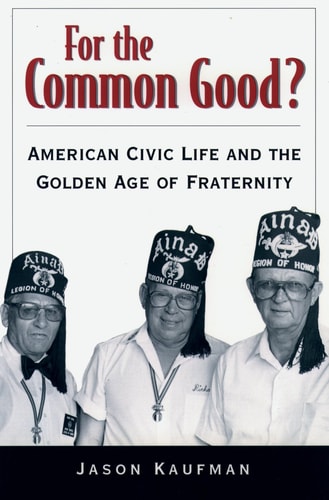
For the Common Good?: American Civic Life and the Golden Age of Fraternity
0
0
As an Amazon Associate and affiliate partner, Menrva Books earns from qualifying purchases. Learn more
Author Description
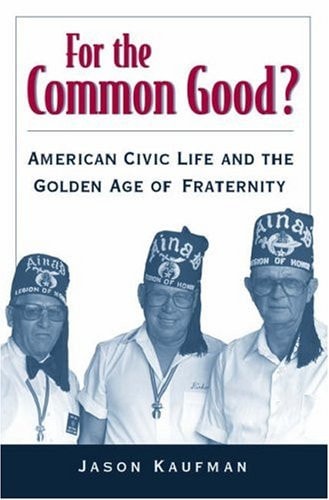
The Golden Age of Fraternity was a unique time in American history. Joining clubs, fraternities, militias, and mutual benefit societies between the Civil and First World Wars was so prevalent that many contemporaries see it as a model for a revitalization of American civil society today. Relying on extensive analysis of city directories, club histories, and membership lists, For the Common Good? aims to dispel many of the myths about the curative powers of clubbing while bringing to light the hidden lessons therein.
Menrva's Summary
THE THESIS
Does the historical prevalence of voluntary associations in America truly offer a viable blueprint for modern civic revitalization? Jason Kaufman, a scholar of social history, examines the period between the Civil War and World War I to challenge contemporary assumptions about the efficacy of fraternal organizations. By synthesizing archival data from city directories and organizational records, he argues that the historical reality of these clubs was more complex and less universally beneficial than modern nostalgia suggests.
THE SCOPE MAP
What You Will Find
- Historical analysis of American voluntary associations between the Civil War and World War I.
- Quantitative examination of city directories, club histories, and membership lists.
- Critical evaluation of the mythos surrounding fraternal organizations and mutual benefit societies.
- Assessment of the structural impact of clubbing on local and national civic life.
THE AUTHORITY PERSPECTIVE
Experts recognize this work as a rigorous empirical challenge to the romanticized view of American civil society. Readers frequently note the academic density of the prose and the author's commitment to data-driven historical revisionism.
Page Count:
304
Publication Date:
2003-07-17
Publisher:
Oxford University Press
ISBN-10:
0195148584
ISBN-13:
9780195148589
History
Sociology
American History
Associations institutions
Voluntarism