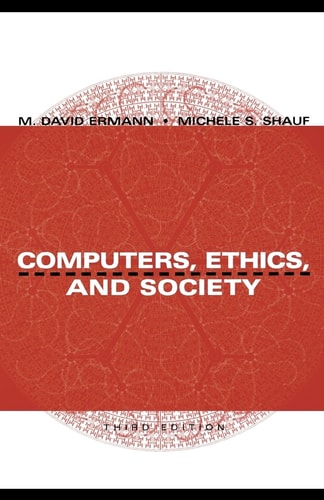
Computers, Ethics, and Society
0
0
As an Amazon Associate and affiliate partner, Menrva Books earns from qualifying purchases. Learn more
Author Description
In today's world, computers can have complex and contradictory effects on human life. They can enhance our quality of life by creating access to previously unimagined worlds. On the other hand, as computers become increasingly important in our everyday lives, their potential to strip away our privacy and autonomy increases exponentially. Computers, Ethics, and Society, now in its third edition, offers a comprehensive, interdisciplinary set of readings on the ethical and social implications of computer technology. Taking into account technological, social, and philosophical issues, the contributors consider topics such as the work-related ramifications of automation, the ethical obligations of computer specialists, and the threats to privacy that come with increased computerization.Thoroughly up-to-date in its coverage, this collection includes articles on specific ethical dilemmas related to contemporary issues and events. Essays new to the third edition cover such topics as cyber-terrorism, the ethics of downloading music from Internet sites, and the question of whether human beings may someday be "replaced" by artificial intelligence and computer technology. An ideal text for sociology, philosophy, and computer science courses, Computers, Ethics, and Society, 3/e, reminds students that although technology has the potential to improve or undermine our quality of life, societal forces ultimately have the power to decide how computers will affect our lives.
Menrva's Summary
THE THESIS
This text investigates the complex, often contradictory impact of computer technology on human autonomy, privacy, and societal structures. M. David Ermann and Michele S. Shauf compile an interdisciplinary collection of essays that examine the intersection of technological advancement and moral responsibility. By integrating perspectives from sociology, philosophy, and computer science, the authors provide a framework for evaluating how human agency influences the trajectory of digital integration.
THE SCOPE MAP
What You Will Find
- Analysis of work-related ramifications stemming from automation and labor displacement.
- Ethical frameworks regarding the professional obligations of computer specialists and developers.
- Examination of privacy threats and data autonomy in an increasingly digitized society.
- Case studies on contemporary dilemmas including cyber-terrorism, digital copyright, and the potential for artificial intelligence to replace human roles.
THE AUTHORITY PERSPECTIVE
This collection is widely utilized as a foundational text in undergraduate courses for sociology, philosophy, and computer science. Experts note that the text provides a balanced, interdisciplinary approach that remains accessible to students while addressing the technical and moral density of the subject matter.
Page Count:
256
Publication Date:
2002-11-14
Publisher:
Oxford University Press
ISBN-10:
0195143027
ISBN-13:
9780195143027
Philosophy
Computer Science
Technology
Ethics
Computers
Sociology
Community Tags
Similar Books