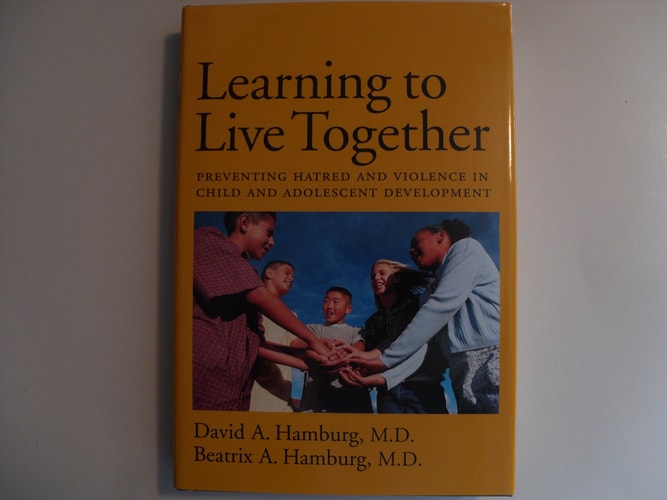
Learning to Live Together: Preventing Hatred and Violence in Child and Adolescent Development
0
0
As an Amazon Associate and affiliate partner, Menrva Books earns from qualifying purchases. Learn more
Author Description
With a view to deepening our understanding of sources of hatred and prejudice, this book uses a developmental and evolutionary perspective to explore and explain the process by which our beliefs are conveyed to the youngest members of society. Discussing the psychological obstacles to peaceful relations between groups, the authors focus on the developmental processes by which we can work to diminish ethnocentrism, prejudice, and hatred, which children learn from a very early age. Until now, scholarship and practice in international relations have gravely neglected crucial psychological aspects of these terrible problems and have not yet explored the educational opportunities related to them. Addressing these promising lines of inquiry and innovation, this book fosters a more humane and less violent development in childhood and adolescence. Educators, religious leaders, developmental and social psychologists, will find this a valuable resource, as will a socially concerned segment of the public who are looking for practical ways to work for peace.
Menrva's Summary
THE THESIS
This book investigates the developmental and evolutionary origins of prejudice and hatred in children and adolescents to determine how society can foster more peaceful intergroup relations. The authors, both medical doctors with extensive backgrounds in psychiatry and human development, utilize a multidisciplinary framework that bridges evolutionary biology, social psychology, and educational practice. They argue that because ethnocentrism and hostility are learned behaviors, targeted interventions during formative years can effectively diminish these patterns and promote a more humane society.
THE SCOPE MAP
What You Will Find
- An evolutionary perspective on the origins of human tribalism and group-based prejudice.
- Developmental frameworks for understanding how children internalize societal beliefs and biases.
- Analysis of psychological obstacles that impede peaceful coexistence between diverse groups.
- Practical educational strategies and interventions designed to mitigate violence and hatred in youth.
THE AUTHORITY PERSPECTIVE
Experts and practitioners in the fields of developmental psychology and conflict resolution identify this work as a significant contribution to the intersection of behavioral science and social policy. Readers frequently note the academic rigor of the authors' approach while appreciating the practical implications for educators and community leaders.
Page Count:
432
Publication Date:
2004-04-08
Publisher:
Oxford University Press
ISBN-10:
0195157796
ISBN-13:
9780195157796
Psychology
Social Science
Sociology
Family & Consumer Sciences
Socialization
Education
Peace studies
Community Tags
Similar Books