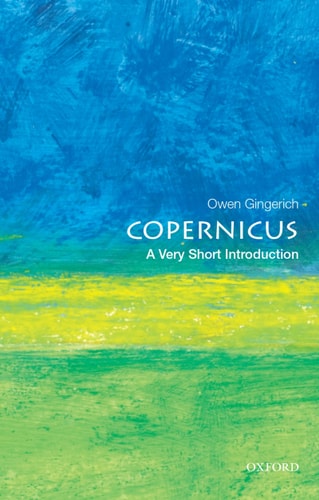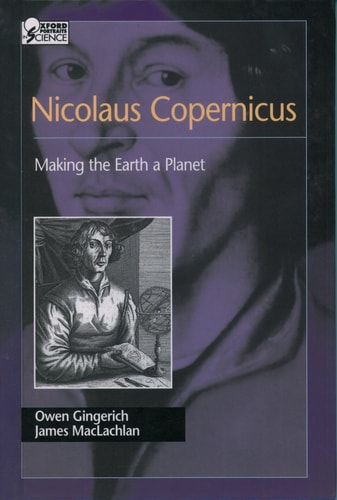
Nicolaus Copernicus: Making the Earth a Planet
0
0
As an Amazon Associate and affiliate partner, Menrva Books earns from qualifying purchases. Learn more
Author Description
Born in Poland in 1473, Nicolaus Copernicus launched a quiet revolution. No scientist so radically transformed our understanding of our place in the universe as this curious bishop's doctor and church official. In his quest to discover a beautiful and coherent system to describe the motions of the planets, Copernicus placed the sun in the center of the system and made the earth a planet traveling around the sun. Today it is hard to imagine our solar system any other way, but for his time Copernicus's idea was earthshaking. In 1616 the church banned his book Revolutions because it contradicted the accepted notion that God placed Earth in the center of the universe. Even though those who knew of his work considered his idea dangerous, Revolutions remained of interest only to other scientists for many years. It took almost two hundred years for his concept of a sun-centered system to reach the general public. None the less, what Copernicus set out in his remarkable text truly revolutionized science. For this, Copernicus, a quiet doctor who made a tremendous leap of imagination, is considered the father of the Scientific Revolution.Oxford Portraits in Science is an on-going series of scientific biographies for young adults. Written by top scholars and writers, each biography examines the personality of its subject as well as the thought process leading to his or her discoveries. These illustrated biographies combine accessible technical information with compelling personal stories to portray the scientists whose work has shaped our understanding of the natural world.
Menrva's Summary
THE THESIS
How did Nicolaus Copernicus fundamentally alter the human perception of the cosmos by repositioning the Earth within the solar system? This biography, authored by James MacLachlan and edited by Owen Gingerich, examines the life of the Polish astronomer against the backdrop of 16th-century religious and scientific constraints. The authors utilize historical records and scientific context to explain the transition from geocentric models to the heliocentric theory that defined the Scientific Revolution. By detailing the intellectual environment of the era, the text illustrates the slow dissemination of ideas that eventually dismantled the prevailing Aristotelian worldview.
THE SCOPE MAP
What You Will Find
- Historical analysis of 15th and 16th-century Polish and European scientific culture.
- Detailed explanation of the heliocentric model versus the geocentric system.
- Primary source context regarding the 1616 church ban of De revolutionibus orbium coelestium.
- Biographical account of Copernicus's dual roles as a church official and a physician.
THE AUTHORITY PERSPECTIVE
Experts recognize this work as a highly accessible entry point for students interested in the history of science. Readers frequently note that the prose balances technical astronomical concepts with the personal history of the subject, making it a foundational text for young adult audiences.
Page Count:
128
Publication Date:
2005-06-16
Publisher:
Oxford University Press
ISBN-10:
0195161734
ISBN-13:
9780195161731
History
Science
Biography
Astronomy
Astronomers
Community Tags
Similar Books