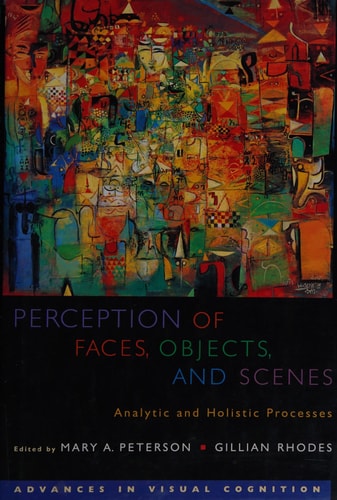
Perception of Faces, Objects, and Scenes: Analytic and Holistic Processes
0
0
As an Amazon Associate and affiliate partner, Menrva Books earns from qualifying purchases. Learn more
Author Description
From a barrage of photons, we readily and effortlessly recognize the faces of our friends, and the familiar objects and scenes around us. However, these tasks cannot be simple for our visual systems--faces are all extremely similar as visual patterns, and objects look quite different when viewed from different viewpoints. How do our visual systems solve these problems? The contributors to this volume seek to answer this question by exploring how analytic and holistic processes contribute to our perception of faces, objects, and scenes. The role of parts and wholes in perception has been studied for a century, beginning with the debate between Structuralists, who championed the role of elements, and Gestalt psychologists, who argued that the whole was different from the sum of its parts. This is the first volume to focus on the current state of the debate on parts versus wholes as it exists in the field of visual perception by bringing together the views of the leading researchers. Too frequently, researchers work in only one domain, so they are unaware of the ways in which holistic and analytic processing are defined in different areas. The contributors to this volume ask what analytic and holistic processes are like; whether they contribute differently to the perception of faces, objects, and scenes; whether different cognitive and neural mechanisms code holistic and analytic information; whether a single, universal system can be sufficient for visual-information processing, and whether our subjective experience of holistic perception might be nothing more than a compelling illusion. The result is a snapshot of the current thinking on how the processing of wholes and parts contributes to our remarkable ability to recognize faces, objects, and scenes, and an illustration of the diverse conceptions of analytic and holistic processing that currently coexist, and the variety of approaches that have been brought to bear on the issues.
Menrva's Summary
THE THESIS
This volume investigates the fundamental mechanisms of visual recognition by examining the interplay between analytic and holistic processing in the perception of faces, objects, and scenes. Edited by Gillian Rhodes and Mary A. Peterson, the text compiles research from leading scholars to address whether visual systems rely on part-based or whole-based analysis. The contributors evaluate whether distinct neural mechanisms govern these processes and challenge the assumption that a single, universal system accounts for all visual recognition tasks.
THE SCOPE MAP
What You Will Find
- Comparative analysis of Structuralist versus Gestalt psychological theories regarding visual perception.
- Examination of the cognitive and neural mechanisms underlying the recognition of faces, objects, and scenes.
- Synthesis of diverse research methodologies used to define holistic and analytic processing across different domains.
- Critical discussion on whether holistic perception is a functional reality or a subjective illusion.
THE AUTHORITY PERSPECTIVE
Experts identify this collection as a foundational resource for understanding the historical and contemporary debate surrounding visual information processing. Researchers frequently note the academic density of the prose, making it a specialized text for those engaged in cognitive psychology and visual neuroscience.
Page Count:
412
Publication Date:
2003-05-22
Publisher:
Oxford University Press
ISBN-10:
0195165381
ISBN-13:
9780195165388
Psychology
Science
Neuroscience
Community Tags
Similar Books







Reader Comments
Share Your Thoughts
No comments yet. Be the first to share your thoughts!