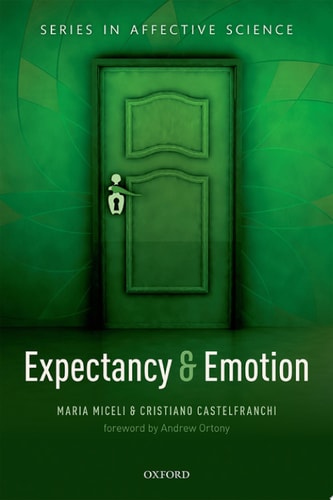
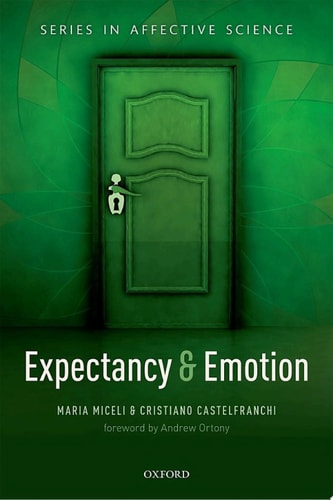
Expectancy and Emotion
0
0
As an Amazon Associate and affiliate partner, Menrva Books earns from qualifying purchases. Learn more
Author Description
The Mind Is A Powerful Anticipatory Device. It Frequently Makes Predictions About The Future, Telling Us Not Only How The World Might Or Will Be, But Also How It Should Be - Or Better - How We Would Like It To Be. These Expectancies Shape Our Lives: They Impact On Our Actual Outcomes, Often Acting As Self-fulfilling Prophecies. They Also Constitute A Reference Point For Establishing Whether An Outcome Is A Loss Or A Gain; That Is, We Evaluate Our Own Outcomes Not In Absolute Terms, But Against Our Expectancies. And We Feel Ill-treated And Betrayed When Our Expectancies Are Disappointed. This Book Explores Anticipation-based Emotions, That Is, The Emotions Associated With The Dialectical Interaction Between 'what Is' And 'what Is Not (yet)', Be It A Mere Wished-for Possibility Or An Expectation Proper. It Offers An Analysis Of Both The Emotions Implying Anticipations Of Future Events - Such As Fear, Anxiety, Hope, And Trust - And Those Elicited By The Disconfirmation Of A Previous Anticipation - Surprise, Disappointment, Discouragement, Sense Of Injustice, Regret, And Relief - In Terms Of Their Belief And Goal Components. In Addition, It Addresses Anticipated Emotions, That Is, Emotions We Think We Might Experience In Future Circumstances, And Explores How They Influence Our Decisions. The Reader Will Be Taken On A Journey Of Exploration And Discovery Into The Multifarious Facets And Implications Of An Important Family Of Emotions, Aimed At Understanding What They Have In Common, As Well As The Distinguishing Features Of Each Distinct Emotion, And Predicting Their Motivational And Behavioral Consequences. For Students And Researchers Interested In The Affective Sciences, Including Psychology, Philosophy, And Neuroscience, This Is A Highly Original And Thought Provoking New Work.
Menrva's Summary
THE THESIS
This work investigates how human anticipation and the resulting expectancies function as primary drivers of emotional experience and behavioral decision-making. Authors Cristiano Castelfranchi and Maria Miceli utilize a cognitive-functional framework to analyze how the gap between desired outcomes and perceived reality generates specific emotional states. By deconstructing the belief and goal components of these states, the authors argue that emotions are not merely reactive but are deeply rooted in the mind's capacity to project and evaluate future possibilities.
THE SCOPE MAP
What You Will Find
- A taxonomy of anticipation-based emotions including fear, anxiety, hope, and trust.
- Analysis of post-disconfirmation emotions such as disappointment, regret, and relief.
- A cognitive model linking belief structures and goal pursuit to emotional intensity.
- Examination of anticipated emotions and their role in shaping human decision-making processes.
Scope Limits
- The text focuses primarily on cognitive and psychological mechanisms rather than clinical pathology or therapeutic intervention.
- It does not provide an exhaustive survey of every known human emotion, focusing instead on those specifically tied to expectation.
THE AUTHORITY PERSPECTIVE
Experts in the affective sciences recognize this text as a rigorous contribution to the study of cognitive appraisal theories. Readers frequently note the academic density of the prose, which is tailored for researchers and students familiar with psychological and philosophical discourse.
Page Count:
240
Publication Date:
2014-01-01
Publisher:
Oup Oxford
ISBN-10:
0191509272
ISBN-13:
9780191509278
Psychology
Philosophy
Behavioral Science
Emotion Theory
Neuroscience
Community Tags
Other Editions(3)

Similar Books






Reader Comments
Share Your Thoughts
No comments yet. Be the first to share your thoughts!