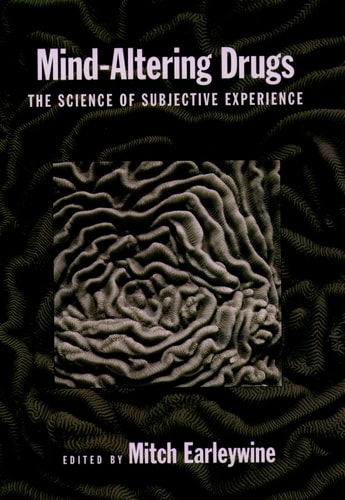
Mind-Altering Drugs: The Science of Subjective Experience
0
0
As an Amazon Associate and affiliate partner, Menrva Books earns from qualifying purchases. Learn more
Author Description
At least one of every three Americans has used an illicit drug. Drugs attract considerable attention in science, legislation, and the media. Nonetheless, many people develop attitudes about drugs and drug users based on limited information. Researchers often find themselves divided into camps based on the drug they study most often, which limits their ability to benefit from important work done on other drugs. As a result, government policies form without a complete understanding of the intoxication experience. What is the nature of intoxication? At first, this question appears to be simple and straightforward, but upon closer inspection, the dichotomous distinctions between everyday awareness and its alternatives grow fuzzy. An in-depth examination of the subjective effects of drugs and the pursuit of altered states soon leads to age-old questions about free will, heredity, environment, and consciousness. Mind-Altering Drugs is the first book to bring together chapters from leading researchers that present diverse, empirically based insights into the subjective experiences of drugs and their links to addictive potential. By avoiding simple depictions of psychoactive chemicals and the people who use them, these recognized experts explain how modern research in many fields reveals a complex interaction between people, situations, and substances. Their work demonstrates that only a multitude of approaches can show the nuances of subjective experience, and that each substance may create a different effect with every administration in each user. Simple references to physiological underpinnings or positive reinforcement fail to explain the diverse responses to drugs. However, research has progressed to reveal broad, repeatable evidence that the subjective effects of substances play an important role in our understanding of drug abuse, and so should inform our decisions about policy.
Menrva's Summary
THE THESIS
How do the subjective experiences of drug intoxication inform our understanding of addiction, human consciousness, and the development of effective public policy? Editor Mitch Earleywine compiles research from leading experts to challenge simplistic views on psychoactive substances. By integrating diverse empirical perspectives, the text argues that intoxication is not a uniform physiological response but a complex interaction between individual biology, environmental context, and specific chemical properties. The book serves as a bridge between isolated research silos to provide a more holistic framework for analyzing drug use.
THE SCOPE MAP
What You Will Find
- Analysis of the subjective nature of intoxication across various psychoactive substances.
- Examination of the interplay between heredity, environment, and individual free will in drug use.
- Empirical data synthesis from multiple scientific disciplines including psychology and pharmacology.
- Critical evaluation of current government drug policies in relation to modern research findings.
THE AUTHORITY PERSPECTIVE
Experts recognize this volume as a necessary synthesis for those seeking to move beyond binary debates regarding illicit substances. Readers frequently note the academic rigor of the contributors while appreciating the accessible structure that makes complex pharmacological concepts understandable for a broader audience.
Page Count:
416
Publication Date:
2005-04-14
Publisher:
Oxford University Press
ISBN-10:
0195165314
ISBN-13:
9780195165319
Science
Psychology
Public Policy
Pharmacology
Sociology
Community Tags
Similar Books