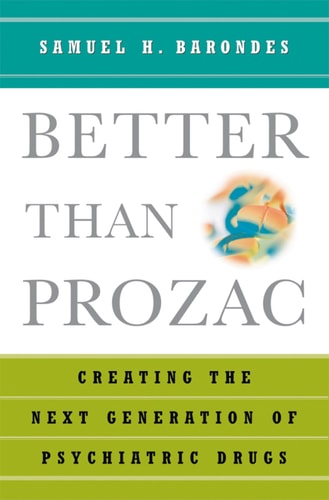
Better than Prozac: Creating the Next Generation of Psychiatric Drugs
0
0
As an Amazon Associate and affiliate partner, Menrva Books earns from qualifying purchases. Learn more
Author Description
Every day millions of people take psychiatric drugs. In Better Than Prozac Samuel Barondes considers the benefits and limitations of Prozac, Ritalin, Valium, Risperdal, and other widely used medications and the ways that superior ones are being created. In tracing the early history of these drugs Barondes describes the accidental observations that led to their discovery and their great impact on our view of mental illness. He goes on to show how their unexpected therapeutic effects were attributed to their influence on neurotransmitters that carry signals in the brain and how this guided their improvement. But Barondes reminds us that, like the originals, current psychiatric drugs don't always work, and often have negative side effects. Furthermore, none were crafted as remedies for known brain abnormalities. In contrast, the design of the drugs of the future will be based on a different approach: an understanding of the molecular mechanisms that give rise to specific patterns of mental symptoms. Using colorful examples of contemporary research, he shows how it is gradually leading to a new generation of psychiatric medications. A lucid evaluation of psychopharmacology, Better Than Prozac offers a deep understanding of psychiatric drugs for people who take them, those who are considering them, and those who are just fascinated by the powerful effects of these simple chemicals on our thoughts and our feelings.
Menrva's Summary
THE THESIS
This book investigates the limitations of current psychiatric medications and the scientific shift toward designing drugs based on specific molecular mechanisms of mental illness. Samuel H. Barondes, a professor of psychiatry and neurobiology, utilizes his extensive background in the field to evaluate the history of psychopharmacology. He argues that while early drugs were discovered through serendipity and neurotransmitter observation, the future of the field relies on mapping the precise biological pathways that generate mental symptoms.
THE SCOPE MAP
What You Will Find
- Historical overview of drug discovery including Prozac, Ritalin, and Valium
- Analysis of the neurotransmitter-based model of psychiatric treatment
- Examination of the molecular mechanisms underlying mental health symptoms
- Case studies of contemporary research in drug development
Scope Limits
- Does not provide clinical medical advice for individual patients
- Does not cover non-pharmacological therapeutic interventions
THE AUTHORITY PERSPECTIVE
Experts and readers frequently note the clarity of the author's prose in explaining complex neurobiological concepts for a general audience. The text is widely regarded as a balanced evaluation of the current state and future trajectory of psychopharmacology.
Page Count:
233
Publication Date:
2003-01-01
Publisher:
Oxford University Press
ISBN-10:
0190288000
ISBN-13:
9780190288006
History
Science
Psychology
Neuroscience
Allied Health
Pharmacology
Psychiatry
Medical
Mental Health
Community Tags
Similar Books