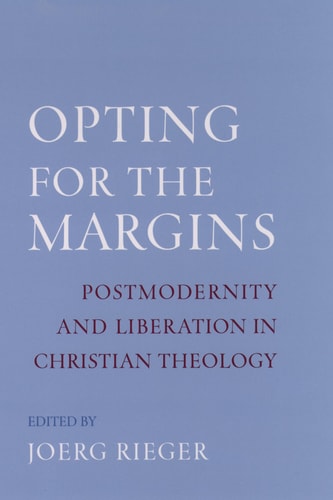
Opting for the Margins: Postmodernity and Liberation in Christian Theology
0
0
As an Amazon Associate and affiliate partner, Menrva Books earns from qualifying purchases. Learn more
Author Description
Ideas like the "preferential option for the poor"-arguing that people marginalized by the economy have a claim to "special consideration"-have been among the most significant insights in twentieth-century Christian theology. Arising out of various theologies of liberation, options for the poor and for people at the margins of society have provided major new impulses for biblical studies, systematic theology, church history, ecclesial practice, and the academic study of religion. Opting for the margins continues to be an important issue at a time when the gap between rich and poor is growing at an alarming rate both in the United States and in many other parts of the world, and when other gaps (based, for example, on differences in gender or race) continue to linger.Recently, however, options for the margins have been challenged by postmodern shifts in intellectual, social, political, and economic realities that often replace preferential options with other emphases, such as general concerns for pluralism, otherness, and difference. Options for the margins are therefore (at best) reduced to the special interests of certain minority groups, or (at worst) rejected as antiquated and irrelevant for the twenty-first century.The essays in this volume show how some forms of postmodern thought and theology can mask patterns of oppression and provide an excuse for deafness to voices from the margins. The authors, writing from a wide variety of national, ethnic, and theological perspectives, seek to revive the preferential option for the poor for the postmodern world, showing how options for the margins can engage postmodernity in new ways and break new ground in religious, theological, and ethical, as well as social, political, and economic thinking. The essays connect philosophical and theological arguments to the concrete realities of the postmodern world and to uncover new sources of energy in the life and death struggles of people across the globe.
Menrva's Summary
THE THESIS
This volume investigates how the Christian theological commitment to the 'preferential option for the poor' can be sustained and re-articulated within the complex intellectual and socio-economic landscape of postmodernity. Joerg Rieger, a prominent theologian specializing in the intersection of theology and social justice, curates a collection of essays that challenge the tendency of postmodern discourse to dilute or dismiss the urgency of marginalized voices. The authors argue that while postmodernity emphasizes pluralism and difference, it often risks obscuring systemic patterns of oppression, necessitating a renewed, critical engagement between liberation theology and contemporary philosophical frameworks.
THE SCOPE MAP
What You Will Find
- Critical analysis of the tension between postmodern pluralism and the preferential option for the poor.
- Interdisciplinary methodologies bridging systematic theology, biblical studies, and political economy.
- Diverse perspectives from international contributors representing various ethnic and theological backgrounds.
- Ethical frameworks for addressing the widening global wealth gap and systemic social inequalities.
THE AUTHORITY PERSPECTIVE
Scholars and students of religion frequently cite this collection as a vital resource for understanding the intersection of liberation theology and contemporary critical theory. Experts highlight the text for its ability to maintain academic rigor while addressing the practical, lived realities of marginalized communities in a globalized world.
Page Count:
224
Publication Date:
2003-09-11
Publisher:
Oxford University Press
ISBN-10:
019516119X
ISBN-13:
9780195161199
Religion
Liberation theology
Ethics
Theology
Postmodernism
Social justice
Christianity
Community Tags
Similar Books