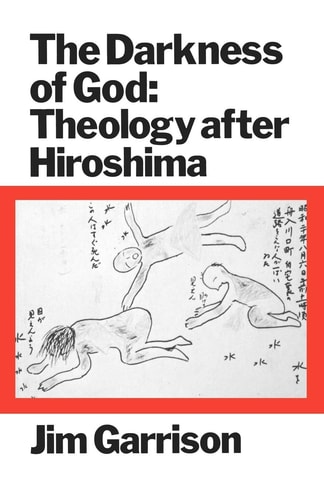
The Darkness of God: Theology After Hiroshima
0
0
As an Amazon Associate and affiliate partner, Menrva Books earns from qualifying purchases. Learn more
Author Description
Why is it that after several thousand million years of evolving life on the planet earth, our species- in our generation - has brought this life to the verge of extinction through thermonuclear war? This, Jim Garrison argues, is the single greatest question of our age. The dangers need no emphasizing, and have already been starkly portrayed in his From Hiroshima to Harrisburg. Here the foCus shifts from scientific and political questions to the theological dimension. God, Dr Garrison argues, is in Hiroshima as he is in other saving events in history. The development symbolized by Hiroshima directs our attention beyond narrow sectional interest to the source of life which creates and sustains us all. God is at work even in the atom bomb, calling us to a transformation of consciousness and understanding. Hiroshima confronts us as never before with the demand that we should take the wrath of God seriously. God is the Go, d of all possibilities. And at the same time, we have taken upon ourselves that which the traditional view left in God's hands alone: the determination of apocalyptic judgment. This means that we must internalize theologically both the terror and the salvation of the traditional Judaeo-Christian concept of apocalypse as something that will not be done to us by divine fiat alone, but as something that might well be done by us through our own decision, God working divine wrath through our arrogance. - How Hiroshima, apocalyptic, and the darkness of God at work in Christ crucified are related together form the theme of one of the most powerful pieces of theology of our time.
Menrva's Summary
THE THESIS
The Darkness of God Theology After Hiroshima Jim Garrison confronts the profound theological implications of humanity's capacity for self-destruction, particularly in the context of nuclear warfare. He argues that the event of Hiroshima, rather than being a purely scientific or political catastrophe, represents a critical theological moment. Garrison posits that God is present even in such devastating events, calling humanity to a transformation of consciousness and understanding, and that we must take the 'wrath of God' seriously as we now hold the power of apocalyptic judgment in our own hands.
THE SCOPE MAP
- Exploration of the theological dimension of nuclear war and humanity's capacity for extinction.
- Analysis of Hiroshima as a symbol of divine presence and a call to transformation.
- Examination of the traditional concept of apocalypse and its internalization by humanity.
- Discussion of how human arrogance can manifest divine wrath.
- The relationship between Hiroshima, apocalyptic thought, and the 'darkness of God' in Christ's crucifixion.
THE AUTHORITY PERSPECTIVE
This work is presented as a significant theological exploration of the nuclear age, positioning Hiroshima as a pivotal moment for understanding divine presence and human responsibility. The book's central argument suggests that humanity now wields the power of apocalyptic judgment, a responsibility traditionally left to God. It aims to connect the terror and salvation inherent in apocalyptic concepts with the reality of nuclear threat, framing it as a call for a profound shift in consciousness. The author's perspective emphasizes that divine wrath can be enacted through human decisions and arrogance, making the theological implications of nuclear warfare a central theme.
Page Count:
238
Publication Date:
1982-01-01
Publisher:
SCM Press
ISBN-10:
0334003040
ISBN-13:
9780334003045
Philosophy
History
Non-Fiction
Theology
Community Tags
Similar Books