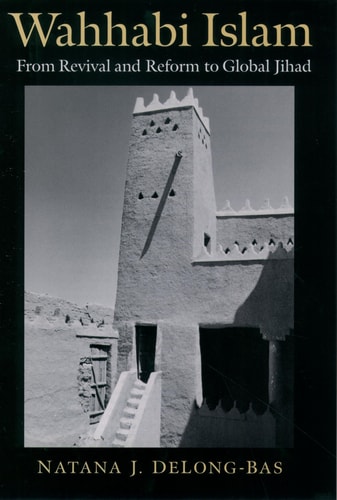
Wahhabi Islam: From Revival and Reform to Global Jihad
0
0
As an Amazon Associate and affiliate partner, Menrva Books earns from qualifying purchases. Learn more
Author Description
Before 9/11, few Westerners had heard of Wahhabism. Today, it is a household word. Frequently mentioned in association with Osama bin Laden, Wahhabism is portrayed by the media and public officials as an intolerant, puritanical, militant interpretation of Islam that calls for the wholesale destruction of the West in a jihad of global proportions. In the first study ever undertaken of the writings of Wahhabism's founder, Muhammad Ibn Abd al-Wahhab (1702-1791), Natana DeLong-Bas shatters these stereotypes and misconceptions. Her reading of Ibn Abd al-Wahhab's works produces a revisionist thesis: Ibn Abd al-Wahhab was not the godfather of contemporary terrorist movements. Rather, he was a voice of reform, reflecting mainstream 18th-century Islamic thought. His vision of Islamic society was based upon a monotheism in which Muslims, Christians and Jews were to enjoy peaceful co-existence and cooperative commercial and treaty relations. Eschewing medieval interpretations of the Quran and hadith (sayings and deeds of the prophet Muhammad), Ibn Abd al-Wahhab called for direct, historically contextualized interpretation of scripture by both women and men. His understanding of theology and Islamic law was rooted in Quranic values, rather than literal interpretations. A strong proponent of women's rights, he called for a balance of rights between women and men both within marriage and in access to education and public space. In the most comprehensive study of Ibn Abd al-Wahhab's interpretation of jihad ever written, DeLong-Bas details a vision in which jihad is strictly limited to the self-defense of the Muslim community against military aggression. Contemporary extremists like Osama bin Laden do not have their origins in Wahhabism, she shows. The hallmark jihadi focus on a cult of martyrdom, the strict division of the world into two necessarily opposing spheres, the wholescale destruction of both civilian life and property, and the call for global jihad are entirely absent from his writings.
Menrva's Summary
THE THESIS
Does the historical record of Muhammad Ibn Abd al-Wahhab’s original writings support the contemporary association of Wahhabism with global militant jihad? Natana J. DeLong-Bas, a scholar of Islamic studies, examines the primary source texts of the 18th-century founder of the movement to challenge prevailing media narratives. By analyzing his theological treatises and legal interpretations, she argues that his vision was one of reform, peaceful coexistence, and gender equity rather than the radical extremism attributed to him by modern terrorist organizations.
THE SCOPE MAP
What You Will Find
- A comprehensive analysis of the original writings of Muhammad Ibn Abd al-Wahhab (1702-1791).
- A historical examination of 18th-century Islamic theology and legal interpretation.
- A detailed study of the concept of jihad as defined in early Wahhabi texts.
- A comparative analysis between the founder's original teachings and modern extremist ideologies.
THE AUTHORITY PERSPECTIVE
Scholars and historians frequently cite this work as a significant revisionist contribution to the study of modern Islamic movements. Readers often note the academic density of the prose, which provides a rigorous, text-based counter-narrative to popular misconceptions regarding the origins of contemporary militancy.
Page Count:
384
Publication Date:
2004-07-15
Publisher:
Oxford University Press
ISBN-10:
0195169913
ISBN-13:
9780195169911
Religion
History
Politics
Kindle eBooks
Systems Theory
Islam
Categories
Theology
Muhammed
Kindle Store
Community Tags
Similar Books