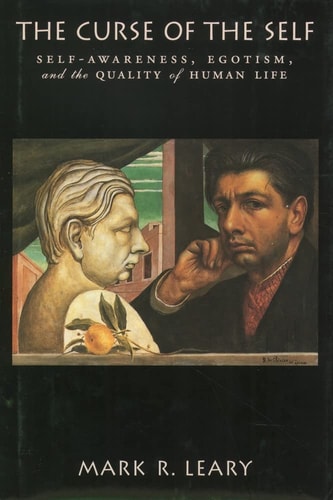
The Curse of the Self: Self-Awareness, Egotism, and the Quality of Human Life
0
0
As an Amazon Associate and affiliate partner, Menrva Books earns from qualifying purchases. Learn more
Author Description
Despite its obvious advantages, our ability to be self-reflective comes at a high price. Few people realize how profoundly their lives are affected by self-reflection or how frequently inner chatter interferes with their success, pollutes their relationships with others, and undermines their happiness. By allowing people to ruminate about the past or imagine what might happen in the future, self-reflection conjures up a great deal of personal suffering in the form of depression, anxiety, anger, jealousy, and other negative emotions. A great deal of unhappiness, in the form of addictions, overeating, and domestic violence, is due to people's inability to exert control over their thoughts and behavior. Is it possible to direct our self-reflection in a way that will minimize the disadvantages and maximize the advantages? Is there a way to affect the egotistical self through self-reflection? In this volume, Mark Leary explores the personal and social problems that are created by the capacity for self-reflection, and by drawing upon psychology and other behavioral sciences, offers insights into how these problems can be minimized.
Menrva's Summary
THE THESIS
Does the human capacity for self-reflection inherently generate personal and social suffering, and can this process be managed to improve quality of life? Mark R. Leary, a distinguished professor of psychology and neuroscience, synthesizes research from behavioral sciences to examine the paradox of self-awareness. He argues that while self-reflection is an evolutionary advantage, it frequently manifests as maladaptive rumination, egotism, and emotional distress, ultimately proposing frameworks for mitigating these negative outcomes.
THE SCOPE MAP
What You Will Find
- Analysis of the psychological mechanisms behind rumination, anxiety, and depression.
- Examination of the link between self-awareness and social behaviors like aggression and jealousy.
- Integration of evolutionary psychology and cognitive behavioral research.
- Strategies for regulating self-referential thought to minimize interpersonal conflict and personal unhappiness.
THE AUTHORITY PERSPECTIVE
Experts and readers frequently cite this work as a foundational text for understanding the cognitive roots of human suffering. The prose is noted for its accessibility, effectively bridging the gap between rigorous academic research and practical application for the general reader.
Page Count:
240
Publication Date:
2004-07-29
Publisher:
Oxford University Press
ISBN-10:
0195172426
ISBN-13:
9780195172423
Personal Development
Psychology
Egoism
Self Help
Behavioral Science
Cognitive Psychology
Community Tags
Similar Books