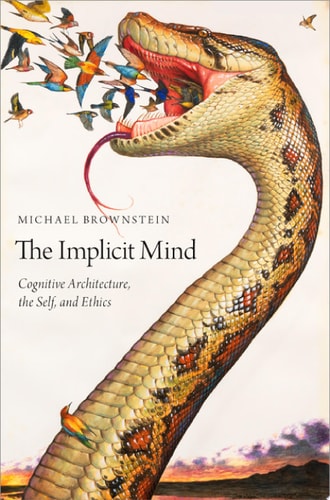
The Implicit Mind: Cognitive Architecture, the Self, and Ethics
0
0
As an Amazon Associate and affiliate partner, Menrva Books earns from qualifying purchases. Learn more
Author Description
Heroes are often admired for their ability to act without having "one thought too many," as Bernard Williams put it. Likewise, the unhesitating decisions of masterful athletes and artists are part of their fascination. Examples like these make clear that spontaneity can represent an ideal. However, recent literature in empirical psychology has shown how vulnerable our spontaneous inclinations can be to bias, shortsightedness, and irrationality. How can we make sense of these different roles that spontaneity plays in our lives? The central contention of this book is that understanding these two faces of spontaneity-its virtues and its vices-requires understanding the "implicit mind." In turn, understanding the implicit mind requires considering three sets of questions. The first set focuses on the architecture of the implicit mind itself. What kinds of mental states make up the implicit mind? Are both "virtue" and "vice" cases of spontaneity products of one and the same mental system? What kind of cognitive structure do these states have, if so? The second set of questions focuses on the relationship between the implicit mind and the self. How should we relate to our spontaneous inclinations and dispositions? Are they "ours," in the sense that they reflect on our character or identity? Are we responsible for them? The third set focuses on the ethics of spontaneity. What can research on self-regulation teach us about how to improve the ethics of our implicit minds? How can we enjoy the virtues of spontaneity without succumbing to its vices? Bringing together several streams of philosophical and psychological research, The Implicit Mind is the first book to offer a philosophical account of implicit attitudes.
Menrva's Summary
THE THESIS
How can we reconcile the virtues of spontaneous action with the psychological evidence of bias and irrationality inherent in the implicit mind? Michael Brownstein, a philosopher specializing in cognitive science, investigates the architecture of implicit attitudes to determine how they shape human agency and moral responsibility. By synthesizing empirical psychological research with philosophical inquiry, the author constructs a framework for understanding how individuals can navigate the dual nature of their spontaneous inclinations.
THE SCOPE MAP
What You Will Find
- A structural analysis of implicit mental states and cognitive architecture.
- An examination of the relationship between implicit dispositions and personal identity.
- A normative framework for self-regulation and moral responsibility regarding implicit biases.
- Integration of contemporary empirical psychology and traditional moral philosophy.
Scope Limits
- The text does not provide a clinical guide for psychological therapy or behavioral modification.
- It does not offer an exhaustive history of the development of implicit bias testing.
THE AUTHORITY PERSPECTIVE
Scholars and philosophers recognize this work as a significant contribution to the intersection of cognitive science and ethics. Readers frequently note the academic density of the prose, which requires a foundational understanding of both philosophical argumentation and psychological theory.
Page Count:
272
Publication Date:
2018-01-01
Publisher:
Oxford University Press
ISBN-10:
0190633743
ISBN-13:
9780190633745
Philosophy
Intuition
Neuroscience
Behavioral Science
Ethics
Cognitive Psychology
Mind & Body
Community Tags
Similar Books