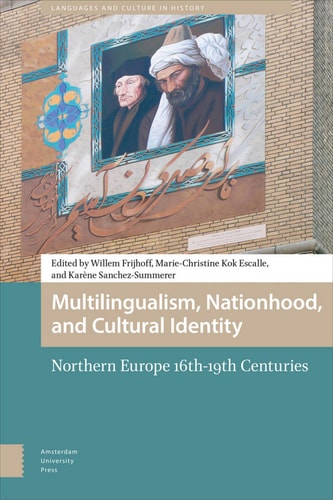
Multilingualism, Nationhood, and Cultural Identity: Northern Europe, 16th-19th Centuries
0
0
As an Amazon Associate and affiliate partner, Menrva Books earns from qualifying purchases. Learn more
Author Description
This work offers systemic and analytical studies of the little known multilingual practices of Northern Europe before the creation of nation-states. In the 17th century, or Golden Age, the Dutch Republic was home to a society where the practice of multilingualism was embedded in its social dynamics, in the use of dialects and foreign languages with their social functions and group identities. These same realities can be found today in other Northern European countries. The notion of a national language did not crystallize before the contemporary period and the creation of nation-states. However, the ideal of a universal language has been present throughout history. This methodological discussion of the systems of European countries where multiple languages co-existed between the 16th and the 19th centuries provides valuable lessons for the understanding of today's societies. NB CATALOGUSTEKST CHICAGO: Before the modern nation-state became a stable, widespread phenomenon throughout northern Europe, multilingualism-the use of multiple languages in one geographical area-was common throughout the region. This book brings together historians and linguists, who apply their respective analytic tools to offer an interdisciplinary interpretation of the functions of multilingualism in identity-building in the period, and, from that, draw valuable lessons for understanding today's cosmopolitan societies.
Menrva's Summary
THE THESIS
This work investigates the complex interplay between multilingualism, nationhood, and cultural identity in Northern Europe prior to the consolidation of modern nation-states. The book brings together historians and linguists to analyze the historical multilingual practices of the region from the 16th to the 19th centuries, focusing on how the use of multiple languages, dialects, and foreign tongues shaped social dynamics and group identities. It challenges the notion that a singular national language was the norm before the contemporary period, highlighting the historical presence of ideals like a universal language alongside the reality of coexisting languages. The studies offer an interdisciplinary interpretation of multilingualism's functions in identity formation, providing insights relevant to understanding today's cosmopolitan societies.
THE SCOPE MAP
- Systemic and analytical studies of multilingual practices in Northern Europe (16th-19th centuries).
- Focus on the Dutch Republic's Golden Age as a case study of embedded multilingualism.
- Exploration of the social functions of dialects and foreign languages in relation to group identities.
- Discussion on the historical development of the concept of a national language versus the ideal of a universal language.
- Interdisciplinary interpretation by historians and linguists.
- Analysis of identity-building through multilingualism.
- Lessons for understanding contemporary cosmopolitan societies.
THE AUTHORITY PERSPECTIVE
This collection of essays offers a scholarly examination of a historical period and phenomenon that has been historically under-researched, focusing on the nuanced relationship between language use and identity formation before the advent of nation-states. The interdisciplinary approach, combining historical and linguistic perspectives, provides a comprehensive analysis of multilingual practices in Northern Europe. The work is positioned to offer valuable insights into the historical roots of linguistic diversity and its impact on societal structures, with clear relevance for contemporary discussions on multiculturalism and national identity. The book aims to shed light on how societies navigated linguistic plurality in the absence of strong national linguistic policies.
Page Count:
188
Publication Date:
2016-12-16
Publisher:
Amsterdam University Press
ISBN-10:
9048530008
ISBN-13:
9789048530007
History
Non-Fiction
Linguistics
European History
Community Tags
Similar Books