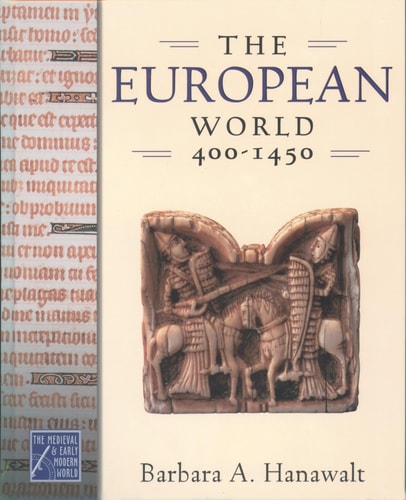
The European World, 400-1450
0
0
As an Amazon Associate and affiliate partner, Menrva Books earns from qualifying purchases. Learn more
Author Description
As the Roman Empire began to crumble and lose its long-held dominance over Europe, new civilizations were emerging to fill the void. Germanic tribes like the Goths, the Franks, and the Vandals, as well as the Huns and Visigoths all fought for control of the land. Christianity became a more acceptable religion throughout Europe, while the Islamic religion was born in the Middle East and quickly spread, eventually making its way into Europe. The blending and conflict of cultures and beliefs helped to create what we now call the Middle Ages.Fascinating new characters were also rising in Europe like the emperor and empress of the Byzantine Empire Justinian and Theodoraambitious leaders who made one final push to recapture the west and regain the past glory of the Roman Empire. Meanwhile in the west Charlemagne had come to power by crowning himself emperor. A popular leader he spent much of his time travelling through his land on horseback accompanied by an entourage that often included an elephant!Vikings from Scandinavia began raiding parts of Europe until eventually they were stopped by Alfred the king of Wessex in England. By 1066, however, the Scandinavians got their revenge when William the Conqueror invaded England and took over.Filled with intrigue, conflict, power struggles, and colorful characters and based on primary source materials Barbara Hanawalt's The European World is an adventure at every turn. From Attila the Hun to Joan of Arc, from the fall of Rome to the Plague this pivotal moment in history comes alive.
Menrva's Summary
THE THESIS
This work investigates the transformative period between the decline of the Roman Empire and the dawn of the Renaissance, questioning how disparate cultural, religious, and political forces coalesced to form the medieval European identity. Barbara A. Hanawalt, a respected historian of the Middle Ages, utilizes a synthesis of primary source materials and historical analysis to construct a narrative that bridges the gap between late antiquity and the early modern era. The text examines the shifting power dynamics of Germanic tribes, the expansion of Christianity and Islam, and the rise of influential figures such as Charlemagne and Justinian to illustrate the complexity of this historical epoch.
THE SCOPE MAP
What You Will Find
- Analysis of the transition from the Roman Empire to the emergence of Germanic kingdoms.
- Examination of the cultural and religious impact of Christianity and the spread of Islam.
- Profiles of key historical figures including Justinian, Theodora, Charlemagne, and William the Conqueror.
- Coverage of major historical events such as the Viking raids, the Norman Conquest, and the impact of the Plague.
THE AUTHORITY PERSPECTIVE
Experts and educators frequently cite this work as an accessible entry point for students seeking a comprehensive overview of medieval history. Readers often note that the prose balances academic rigor with a narrative style that makes complex political shifts understandable for a general audience.
Page Count:
192
Publication Date:
2005-05-26
Publisher:
Oxford University Press
ISBN-10:
0195178440
ISBN-13:
9780195178449
History
Middle Ages
World history
European History
Community Tags
Similar Books