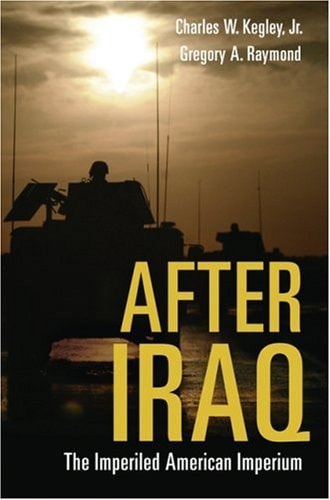
After Iraq: The Imperiled American Imperium
0
0
As an Amazon Associate and affiliate partner, Menrva Books earns from qualifying purchases. Learn more
Author Description
As the year 2001 unfolded, the United States stood at the apex of global power, possessing unrivalled military capabilities, a vibrant economy, and--most of all--great self-confidence about its security. The terrorist attacks of 9/11 shattered America's prevailing illusions of invulnerability, prompting the world's sole superpower to embark on a revolutionary national strategy that led to a preventive war against Iraq. Will the United States be safer and more secure as a result? This book shows why America's new assertively unilateral foreign policy will actually create perils for the next generation of Americans.Written by two seasoned scholars, After Iraq conducts a sweeping survey of America's present position in the global arena and identifies the opportunities and risks that the United States will likely face once the war in Iraq draws to a close. Kegley and Raymond provide an insightful overview of the U.S. response to the unconventional threats posed by global terrorism as well as a searching assessment of the challenges created by the rise of China and other emerging competitors. They argue that the current course of American foreign policy will harm the country by setting dangerous precedents that undermine the moral and legal restraints--which were built painstakingly over the past century--on when and how states may use force. Drawing upon a rich array of historical parallels and empirical evidence, the book illuminates instances in which previous great powers embarked on similar self-defeating strategies. Like the U.S. today, these states once stood at the pinnacle of world power. But due to misperceptions about what they could accomplish with unilateral, preventive uses of military force, they made short-run decisions that undermined their long-term strategic interests. With Americans facing questions about how to combat global terrorism, how to diffuse the nuclear threats of Iran and North Korea, how to adjust to the growing power of China and India, a
Menrva's Summary
THE THESIS
This book investigates whether the United States' shift toward an assertive, unilateral foreign policy following the 9/11 attacks serves its long-term national security interests or creates new, systemic perils. Authors Charles W. Kegley Jr. and Gregory A. Raymond, both established scholars in international relations, utilize historical case studies and empirical data to argue that preventive war and unilateralism undermine the moral and legal frameworks necessary for global stability. They contend that by abandoning these restraints, the U.S. risks repeating the strategic failures of past great powers that overextended their influence.
THE SCOPE MAP
What You Will Find
- Analysis of U.S. foreign policy shifts post-9/11 and the strategic implications of the Iraq War.
- Comparative historical data examining the decline of previous global powers that relied on unilateral military force.
- Assessment of contemporary geopolitical challenges, including the rise of China, India, and nuclear proliferation in Iran and North Korea.
- Evaluation of the long-term consequences of preventive war doctrines on international legal norms and global security.
THE AUTHORITY PERSPECTIVE
Experts recognize this work as a significant contribution to the debate on American hegemony and the risks of unilateralism in the early 21st century. Readers frequently note the academic rigor of the authors' historical comparisons and the clarity with which they outline the potential pitfalls of current strategic doctrines.
Page Count:
176
Publication Date:
2006-09-12
Publisher:
Oxford University Press
ISBN-10:
0195177029
ISBN-13:
9780195177022
History
Military Strategy
International relations
Hegemony
Foreign Policy
Community Tags
Similar Books