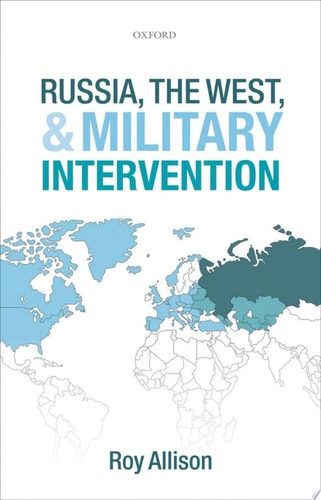
Russia, the West, and Military Intervention
0
0
As an Amazon Associate and affiliate partner, Menrva Books earns from qualifying purchases. Learn more
Author Description
Russia has been embroiled in bitter disputes with major Western powers over high-profile military interventions - over Kosovo (1999), Iraq (2003), Georgia (2008), and even Libya (2011) which had a UN Security Council mandate. Moscow and the West reached much more agreement over the Gulf War (1990) and intervention in Afghanistan (2001), but these cases are exceptional.This interdisciplinary study explores the persistent differences between Russian and Western leaders about most Western-led military campaigns and about Russia's own use of force in the CIS region. What does this tell us about emerging norms on the use of force in humanitarian crises? How and why has there been such controversy over the legal justifications for these military operations? Has greater consensus been possible over force in global counterterrorism? What do all these controversies tell us about international rule-making? More specifically, how can we understand Russian political and diplomatic responses during international crises around major interventions? This book argues that Russia has been influential in these debates on norms and law as a permanent United Nations Security Council member and as a major military power. Moscow's approach to these questions has reflected distinctive and quite entrenched attitudes to international order and sovereignty, as well as a preoccupation with its own status. The book draws deeply on Russian sources to show how these attitudes are expressed among the Russian leadership and the political elite. This raises challenging questions about the ability of Russia and Western states to cooperate in emerging crises, in Syria, Iran, or elsewhere and about Russia's role in international society.
Menrva's Summary
THE THESIS
This study investigates the fundamental divergence between Russian and Western perspectives on the legitimacy, legality, and application of military intervention in international conflicts. Roy Allison, an expert in Russian foreign policy, utilizes a comprehensive analysis of diplomatic records and Russian political discourse to argue that Moscow’s stance is rooted in a distinct conceptualization of sovereignty and international order. By examining key interventions from the 1990s through the early 2010s, the author demonstrates how Russia’s status as a permanent UN Security Council member allows it to actively shape global norms regarding the use of force.
THE SCOPE MAP
What You Will Find
- Comparative analysis of military interventions including Kosovo, Iraq, Georgia, Libya, and Afghanistan.
- Examination of the legal and normative frameworks governing humanitarian intervention and counterterrorism.
- Extensive use of primary Russian sources, including statements from political elites and diplomatic documentation.
- Assessment of Russia's strategic preoccupation with sovereignty and its influence on international rule-making.
THE AUTHORITY PERSPECTIVE
Experts recognize this work as a rigorous, evidence-based examination of the geopolitical friction between Russia and the West. Scholars frequently cite the text for its nuanced understanding of how Russian domestic political priorities translate into international diplomatic behavior.
Page Count:
320
Publication Date:
2013-07-12
Publisher:
Oxford University Press
ISBN-10:
019959063X
ISBN-13:
9780199590636
History
Europe
Military Strategy
Foreign Policy
International relations
Russia
United States
Community Tags
Other Editions(3)
Similar Books


Reader Comments
Share Your Thoughts
No comments yet. Be the first to share your thoughts!