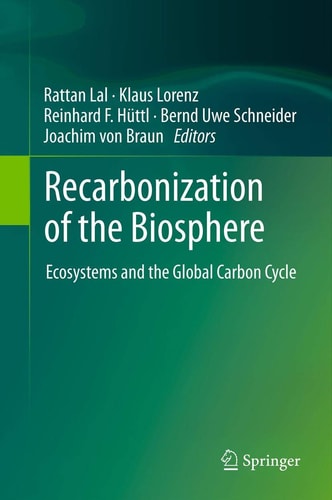
Recarbonization of the Biosphere: Ecosystems and the Global Carbon Cycle
0
0
As an Amazon Associate and affiliate partner, Menrva Books earns from qualifying purchases. Learn more
Author Description
Human activities are significantly modifying the natural global carbon (C) cycles, and concomitantly influence climate, ecosystems, and state and function of the Earth system. Ever increasing amounts of carbon dioxide (CO2) are added to the atmosphere by fossil fuel combustion but the biosphere is a potential C sink. Thus, a comprehensive understanding of C cycling in the biosphere is crucial for identifying and managing biospheric C sinks. Ecosystems with large C stocks which must be protected and sustainably managed are wetlands, peatlands, tropical rainforests, tropical savannas, grasslands, degraded/desertified lands, agricultural lands, and urban lands. However, land-based sinks require long-term management and a protection strategy because C stocks grow with a progressive improvement in ecosystem health.
Menrva's Summary
THE THESIS
The Recarbonization of the Biosphere Ecosystems and the Global Carbon Cycle investigates the profound impact of human activities on Earth's carbon cycles and the potential of the biosphere to act as a carbon sink. It addresses the critical need for understanding biospheric carbon cycling to manage these sinks effectively, given the continuous increase of atmospheric CO2 from fossil fuel combustion. The book details ecosystems that hold significant carbon stocks, emphasizing their protection and sustainable management for long-term carbon sequestration. It highlights that the health and improvement of these ecosystems directly correlate with their capacity to store carbon.
THE SCOPE MAP
- Analysis of human impact on global carbon cycles and climate.
- Identification and management strategies for biospheric carbon sinks.
- Detailed examination of carbon stocks in various ecosystems: wetlands, peatlands, tropical rainforests, savannas, grasslands, degraded lands, agricultural lands, and urban lands.
- Discussion on the importance of long-term management and protection strategies for carbon sequestration.
- Exploration of the relationship between ecosystem health and carbon storage capacity.
- Focus on the role of the biosphere in mitigating atmospheric CO2 increases.
THE AUTHORITY PERSPECTIVE
This book is recognized as a significant contribution to the understanding of global carbon cycles and the biosphere's role in climate regulation. It synthesizes current knowledge on carbon sequestration in various ecosystems, providing a framework for their sustainable management. The work is noted for its comprehensive approach, detailing specific ecosystems and the challenges associated with maintaining their carbon storage capabilities. It serves as a crucial resource for researchers and policymakers concerned with climate change mitigation and ecosystem conservation.
Page Count:
560
Publication Date:
2014-04-16
Publisher:
Springer Netherlands
ISBN-10:
9400799071
ISBN-13:
9789400799073
Non-Fiction
Science
Climate Change
Biosphere
Ecology
Community Tags
Similar Books