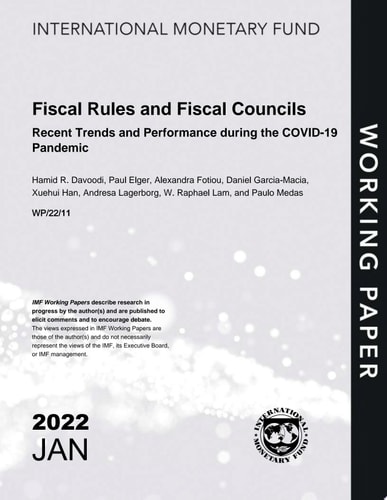
Fiscal Rules and Fiscal Councils: Recent Trends and Performance During the COVID-19 Pandemic
0
0
As an Amazon Associate and affiliate partner, Menrva Books earns from qualifying purchases. Learn more
Author Description
Adoption of fiscal rules and fiscal councils continued to increase globally over the last decades based on two new global datasets. During the pandemic, fiscal frameworks were put to test. The widespread use of escape clauses was one of the novelties in this crisis, which helped provide policy room to respond to the health crisis. But the unprecedented fiscal actions have led to large and widespread deviations from deficit and debt limits. The evidence shows that fiscal rules, in general, have been flexible during crises but have not prevented a large and persistent buildup of debt over time. Experience shows that deviations from debt limits are very difficult to reverse. The paper also presents evidence on the benefits of a good track record in abiding by the rules. All these highlight the difficult policy choices ahead and need to further improve rules-based fiscal frameworks.
Menrva's Summary
THE THESIS
This paper investigates the global adoption and performance of fiscal rules and fiscal councils, particularly in the context of the COVID-19 pandemic. It draws on two new global datasets to analyze trends in fiscal frameworks, the use of escape clauses during the crisis, and the impact of unprecedented fiscal actions on deficit and debt limits. The analysis reveals that while fiscal rules offered flexibility during crises, they have not consistently prevented long-term debt accumulation, and reversing deviations from debt limits proves challenging.
THE SCOPE MAP
- Analysis of global trends in the adoption of fiscal rules and fiscal councils.
- Examination of the role and effectiveness of escape clauses during the COVID-19 pandemic.
- Evidence on the impact of unprecedented fiscal actions on deficit and debt limits.
- Assessment of the long-term debt accumulation associated with fiscal rules.
- Investigation into the difficulty of reversing deviations from debt limits.
- Presentation of evidence on the benefits of a good track record in abiding by fiscal rules.
- Discussion of the policy choices and improvements needed for rules-based fiscal frameworks.
THE AUTHORITY PERSPECTIVE
The paper provides a data-driven analysis of fiscal frameworks, highlighting the trade-offs between flexibility during crises and long-term debt sustainability. It underscores the challenges in reversing fiscal imbalances once they occur, suggesting a need for enhanced rules-based fiscal frameworks. The findings are likely to be of interest to policymakers, economists, and researchers focused on public finance and macroeconomic stability.
Page Count:
40
Publication Date:
2022-01-27
Publisher:
International Monetary Fund
ISBN-13:
9798400200472
Politics
Non-Fiction
Economics
Finance
Community Tags
Similar Books