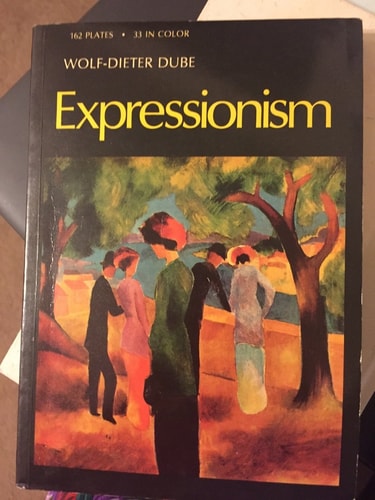
Expressionism
0
0
As an Amazon Associate and affiliate partner, Menrva Books earns from qualifying purchases. Learn more
Author Description
Expressionism was one of the most significant movements in 20th-century art. This book provides a comprehensive survey of the movement, tracing its development from its roots in the work of Van Gogh, Gauguin, and Munch to its peak in Germany before and after the First World War. Wolf-Dieter Dube examines the work of the major Expressionist artists and groups, including Die Brücke and Der Blaue Reiter, and explores the social and political context in which they worked.
Menrva's Summary
THE THESIS
This work investigates the origins, development, and ideological underpinnings of the Expressionist movement in early 20th-century Germany. Wolf-Dieter Dube, a noted art historian, utilizes a combination of primary source manifestos, biographical analysis of key artists, and critical examination of visual works to map the movement's trajectory. He argues that Expressionism was not merely a stylistic shift but a profound reaction against the social and political anxieties of the pre-war era.
THE SCOPE MAP
What You Will Find
- Detailed analysis of the Die Brücke and Der Blaue Reiter artist groups.
- Examination of the socio-political climate in Germany from 1905 to 1920.
- Critical interpretation of key works by artists such as Kirchner, Kandinsky, and Nolde.
- Discussion of the transition from traditional representational art to subjective emotional expression.
THE AUTHORITY PERSPECTIVE
Experts frequently cite this text as a foundational resource for understanding the intellectual history of the Expressionist movement. Readers often note the academic density of the prose, which provides a comprehensive overview suitable for students and scholars of art history.
Page Count:
0
Publication Date:
1977-01-01
Publisher:
W W Norton & Co (Sd)
ISBN-10:
0195199332
ISBN-13:
9780195199338
Non-Fiction
Modern Art
Art History
Expressionism
European Art
Community Tags
Similar Books