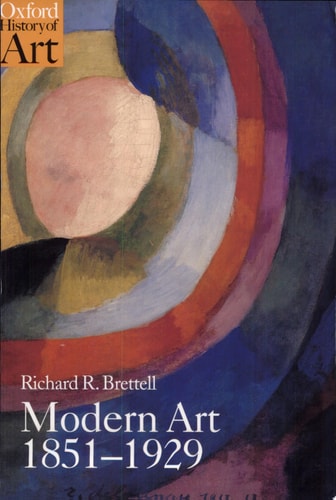
Modern Art 1851-1929: Capitalism and Representation
0
0
As an Amazon Associate and affiliate partner, Menrva Books earns from qualifying purchases. Learn more
Author Description
Richard R. Brettell's innovative and beautifully-illustrated account explores the works of artists such as Monet, Gauguin, Picasso, and Dali--as well as lesser-known figures--in relation to expansion, colonialism, nationalism and internationalism, and the rise of the museum. Beginning with The Great Exhibition of 1851 in London, Brettell follows the development of the major European avant-garde groups: the Realists, Impressionists, Post-Impressionists, Symbolists, Cubists, and Surrealists. Giving attention to the changing social, economic, and political climate, the book focuses on conditions for the development of modern art such as urban capitalism, modernity, and the accessible image made possible by art museums, temporary exhibitions, lithography, and photography. Brettell examines artists' responses to modernism, including changes in representation, vision, and "the art of seeing." Combining the most recent scholarship with 140 illustrations--75 in full color--the book chronicles the change in art and image itself, from the iconology of new representations of the nude human form to the anti-iconography of "art without 'subject'": landscape painting, text and image, and abstraction.Tracing common themes of representation, imagination, perception, and sexuality across works in a wide range of different media, and offering profuse illustration to bring the changing art forms vividly to life, Modern Art 1851-1929 presents a fresh approach to the fine art and photography of this remarkable era.
Menrva's Summary
THE THESIS
This work investigates how the evolution of modern art between 1851 and 1929 was fundamentally shaped by the forces of capitalism, colonialism, and the rise of new visual technologies. Richard R. Brettell, a scholar of 19th and 20th-century art, utilizes a socio-economic framework to analyze how artists navigated the transition from traditional representation to the avant-garde. By situating works within the context of urban expansion and the institutionalization of art, he argues that the aesthetic shifts of the period were direct responses to the changing political and economic landscape of Europe.
THE SCOPE MAP
What You Will Find
- Analysis of major movements including Realism, Impressionism, Post-Impressionism, Symbolism, Cubism, and Surrealism.
- Examination of the impact of photography, lithography, and the museum system on artistic production.
- Discussion of themes such as nationalism, internationalism, and the commodification of the image.
Scope Limits
- The analysis is geographically centered on European developments and does not provide an exhaustive global survey of modernism.
- The text focuses primarily on the intersection of art and socio-economic structures rather than providing a comprehensive biography of every artist mentioned.
THE AUTHORITY PERSPECTIVE
Scholars and students of art history frequently cite this volume as a valuable resource for understanding the material conditions that influenced the avant-garde. Readers often note that the text successfully balances academic rigor with accessible prose, making it a standard reference for those studying the intersection of art and modernity.
Page Count:
272
Publication Date:
1999-07-22
Publisher:
Oxford University Press
ISBN-10:
019284220X
ISBN-13:
9780192842206
Art History
European History
Capitalism
Visual Arts
Modern Art
Art Modern
Community Tags
Similar Books