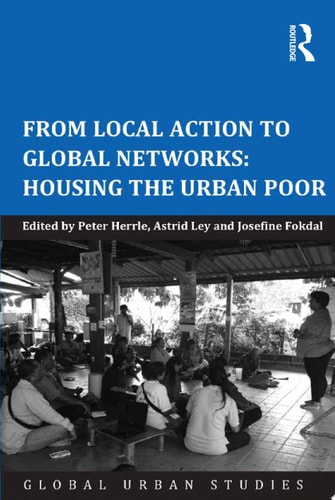
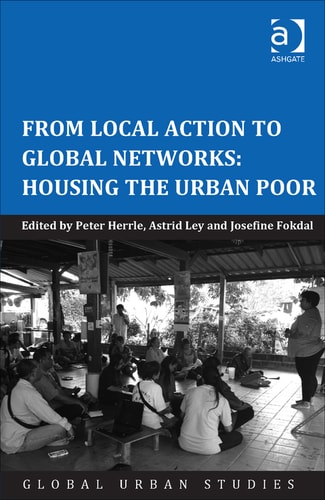
From Local Action to Global Networks: Housing the Urban Poor
0
0
As an Amazon Associate and affiliate partner, Menrva Books earns from qualifying purchases. Learn more
Author Description
Over the past two decades it has become widely recognized that housing issues have to be placed in a broader framework acknowledging that civil society in the form of Community Based Organizations (CBOs) and their allies are increasingly networking and emerging as strong players that cannot easily be overlooked. Some of these networks have crossed local and national boundaries and have jumped political scales. This implies that housing issues have to be looked at from new angles: they can no longer simply be addressed through localized projects, but rather at multiple scales. The current debate is largely limited to statements about the relevance of individual organizations for local housing processes and tends to overlook the innovativeness in terms of re-scaling those processes and of influencing institutional change at various levels by transcending national boundaries. There is a significant lack of a systemic understanding of such globally operating grassroots networks and how they function in the housing process. This book brings together different perspectives on multi-scalar approaches within the housing field and on grassroots’ engagement with formal agencies including local government, higher levels of government and international agencies. By moving away from romanticizing local self-initiatives, it focuses on understanding the emerging potential once local initiatives are interlinked and scaled-up to transnational networks.
Menrva's Summary
THE THESIS
This book investigates the evolving role of community-based organizations and their transnational networks in addressing the housing needs of the urban poor. It examines how these grassroots movements, by scaling up their initiatives and influencing institutional change across local, national, and international levels, are reshaping housing processes. The authors move beyond romanticized views of local self-help to analyze the systemic understanding and functional dynamics of these globally operating networks, focusing on their engagement with formal agencies and the potential unlocked by interlinked, transnational efforts.
THE SCOPE MAP
- Analysis of the rise and networking of Community Based Organizations (CBOs) in housing the urban poor.
- Exploration of multi-scalar approaches to housing issues, from local projects to global networks.
- Examination of how grassroots networks influence institutional change at various governmental levels.
- Focus on the functional dynamics and systemic understanding of globally operating grassroots networks.
- Case studies of interlinked local initiatives scaled up to transnational networks.
- Discussion of the engagement between grassroots organizations and formal agencies, including local, national, and international bodies.
- Critique of romanticized views of local self-initiatives in favor of understanding scaled-up potential.
THE AUTHORITY PERSPECTIVE
The book offers a critical examination of how community-based organizations have evolved from local actors to influential players in global housing networks. It highlights the need for a systemic understanding of these multi-scalar approaches, moving beyond localized projects to analyze the impact of transnational engagement. The work is positioned to inform discussions on housing policy and urban development by focusing on the functional dynamics and institutional influence of grassroots networks.
Page Count:
220
Publication Date:
2016-03-09
Publisher:
Routledge
ISBN-10:
1317132130
ISBN-13:
9781317132134
History
Non-Fiction
Politics
Community Development
Sociology
Urban Studies
Housing policy
Community Tags
Other Editions(3)
Similar Books


Reader Comments
Share Your Thoughts
No comments yet. Be the first to share your thoughts!