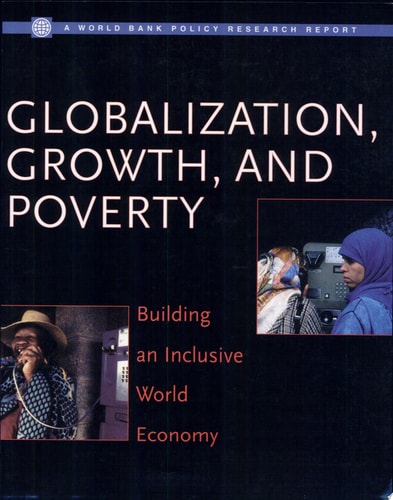
Globalization, Growth, and Poverty: Building an Inclusive World Economy
0
0
As an Amazon Associate and affiliate partner, Menrva Books earns from qualifying purchases. Learn more
Author Description
Globalization is a powerful force for poverty reduction as societies and economies around the world are becoming more integrated. Although this international integration presents tremendous opportunities for developing countries, it also has raised concerns about rising inequality, shifting power, and cultural uniformity. This report assesses the impact of globalization and addresses the ensuing anxieties. It proposes an agenda for action aimed at mitigating the risks that globalization potentially generates, while maximizing the opportunities for the poor.
Menrva's Summary
THE THESIS
This report investigates whether the integration of global economies serves as a viable mechanism for reducing poverty in developing nations. The authors, David Dollar and Paul H. Collier, utilize extensive World Bank data to analyze the correlation between international trade, capital flows, and economic growth. They argue that while globalization introduces significant structural risks, it remains the most effective tool for poverty alleviation when paired with targeted domestic policy reforms and international cooperation.
THE SCOPE MAP
What You Will Find
- Quantitative analysis of trade liberalization and its impact on national GDP growth.
- Frameworks for addressing income inequality and cultural displacement in developing markets.
- Case studies comparing successful integration strategies versus stagnant economic models.
- Policy recommendations for mitigating the risks of global market volatility for vulnerable populations.
THE AUTHORITY PERSPECTIVE
Experts recognize this publication as a foundational document for understanding the World Bank's approach to global economic integration at the turn of the century. Readers frequently note the academic density of the prose and the reliance on empirical data to support its policy-oriented conclusions.
Page Count:
192
Publication Date:
2002-01-17
Publisher:
Oxford University Press
ISBN-10:
0195216083
ISBN-13:
9780195216080
Economics
Globalization
Public Policy
International relations
Poverty
Development
Community Tags
Similar Books