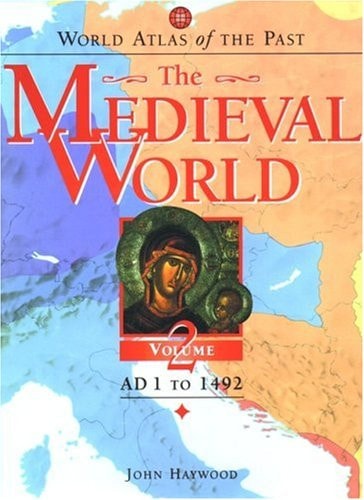
World Atlas of the Past: The Medieval World
0
0
As an Amazon Associate and affiliate partner, Menrva Books earns from qualifying purchases. Learn more
Author Description
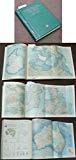
This volume in the World Atlas of the Past series combines 34 newly rendered full-color maps with exquisite art and photographs and engrossing narrative to trace the history of civilization in the Classical and Medieval Ages, from AD 1 to 1492. This state-of-the-art book boasts extensive coverage of the civilizations of Africa, the Americas, Asia, and Europe, which makes it a perfect fit with the global studies and world history curriculum.Each section features a full-page regional map showing such historical events as global migration, wars, and the shift of imperial boundaries, and a highlight map that illustrates a particular aspect of politics or culture. These clear and easy-to-understand maps show how cities have developed, flourished, and declined, how geographical centers have changed, and how civilizations have interacted over time. The accompanying text captures the key historical facts of the period, while sidebars focus on art and artifacts to bring each period to life. A chronology within each section provides ready reference. The volume includes a glossary of terms, suggestions for further reading, and an index.
Menrva's Summary
THE THESIS
This volume investigates the historical development and geographical shifts of global civilizations from the Classical era through the end of the Middle Ages. John Haywood, a noted historian, utilizes a synthesis of cartographic data, archaeological evidence, and historical narrative to document the rise and fall of empires across Africa, the Americas, Asia, and Europe. The work provides a structured framework for understanding how environmental factors and human migration patterns influenced the political and cultural boundaries of the period between AD 1 and 1492.
THE SCOPE MAP
What You Will Find
- Thirty-four newly rendered, full-color regional and highlight maps illustrating imperial expansion and decline.
- Detailed analysis of global migration patterns, warfare, and the evolution of urban centers.
- Chronological references and sidebars focusing on specific art and artifacts from diverse civilizations.
- A comprehensive glossary, index, and bibliography for academic and curriculum-based research.
THE AUTHORITY PERSPECTIVE
Experts and educators frequently cite this work as a valuable visual resource for students of world history and global studies. Readers note that the integration of cartography with concise historical summaries makes the text accessible for both classroom use and independent reference.
Page Count:
64
Publication Date:
2000-07-27
Publisher:
Oxford University Press
ISBN-10:
0195216903
ISBN-13:
9780195216905
History
Geography
Reference
Atlases
Historical geography
World history
Community Tags
Similar Books