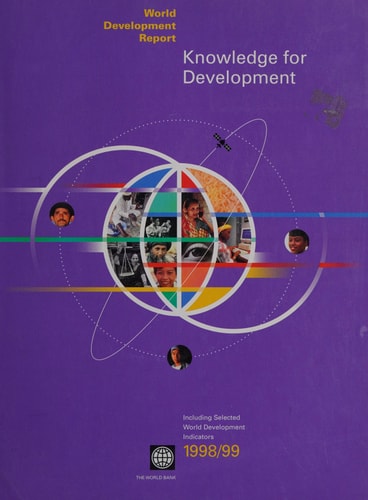
World Development Report 1998/99: Knowledge for Development
0
0
As an Amazon Associate and affiliate partner, Menrva Books earns from qualifying purchases. Learn more
Author Description
The information revolution makes understanding knowledge and development more urgent than before. New communication technologies and plummeting computing costs are transforming distance and eroding borders and time, but the fact remains that people still lack basic, life-saving knowledge because simple information does not flow as readily as one would hope. This year's Report, the twenty-first in this annual series, examines the role of knowledge in advancing economic and social well being. It proposes that we step back from the familiar problems of development and consider them from a fresh, new perspective: the perspective of knowledge. In studying these issues, the Report considers two sorts of knowledge: how-to knowledge (farming, health or accounting) and knowledge about attributes (the quality of a product, credibility of a borrower, or the diligence of an employee). The Report suggests three lessons that are particularly important to the welfare of the billions of people living in developing countries. First, developing countries must institute policies that will enable them to narrow the knowledge gaps that separate poor countries from rich countries. Second, developing country governments, multilateral institutions, non-governmental organizations and the private sector must work together to strengthen the institutions needed to address information problems. Finally, no matter how effective these endeavors are, problems with knowledge will persist, but by recognizing that knowledge is at the core of all our development effort, unexpected solutions to seemingly intractable problems will be discovered.
Menrva's Summary
THE THESIS
This report investigates how the strategic application and distribution of knowledge can serve as a primary driver for economic and social advancement in developing nations. The World Bank utilizes its extensive research capabilities and global economic data to argue that development is not merely a matter of capital accumulation, but a challenge of bridging information gaps. By categorizing knowledge into technical 'how-to' information and attribute-based data, the report provides a framework for governments and institutions to address systemic inequalities and improve welfare outcomes.
THE SCOPE MAP
What You Will Find
- Analysis of the impact of the information revolution on global economic borders.
- Distinction between technical knowledge and attribute-based information in market efficiency.
- Policy recommendations for narrowing the knowledge gap between industrialized and developing nations.
- Collaborative strategies for governments, NGOs, and the private sector to strengthen institutional information systems.
THE AUTHORITY PERSPECTIVE
Experts recognize this report as a foundational text for understanding the intersection of information technology and international development policy. Readers frequently note the academic density of the prose and its significance in shifting the focus of development economics toward knowledge-based infrastructure.
Page Count:
264
Publication Date:
1998-10-01
Publisher:
World Bank Publications
ISBN-10:
0195211189
ISBN-13:
9780195211184
Economics
Public Policy
Sociology
Technology
Community Tags
Similar Books