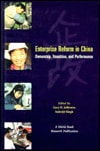
Enterprise Reform in China: Ownership, Transition, and Performance
0
0
As an Amazon Associate and affiliate partner, Menrva Books earns from qualifying purchases. Learn more
Author Description
The transformation and growth of China's economy, which raised living standards for one-fifth of the world's population and provided indirect benefits for many more, stands among the most significant economic developments of the late twentieth century. This book rests on two premises. The first is that the key to China's dramatic economic transformation is that country's industrialization. The second is that the real story of China's industrialization is unfolding at the level of the individual Chinese enterprise and factory. This volume seeks to document the impact of economic reforms on China's industrial sector and to explain why China's reforms, which appear meager relative to the more ambitious reform programs of Eastern Europe and even Russia, have had such wide-reaching effects.
Menrva's Summary
THE THESIS
This book investigates the mechanisms behind China's industrial transformation and the specific impact of economic reforms on the performance of individual factories. Authors Gary H. Jefferson and Inderjit Singh utilize extensive empirical data and enterprise-level analysis to argue that China's incremental reform strategy, while appearing modest compared to Eastern European models, successfully catalyzed significant industrial growth. The text provides a rigorous framework for understanding how ownership structures and market transitions influenced productivity within the Chinese industrial sector.
THE SCOPE MAP
What You Will Find
- Analysis of industrial performance metrics across various ownership types in China.
- Examination of the transition from state-controlled to market-oriented enterprise management.
- Empirical data derived from factory-level surveys and economic performance indicators.
- Comparative insights into why China's reform trajectory diverged from Eastern European and Russian models.
THE AUTHORITY PERSPECTIVE
Experts recognize this volume as a foundational text for understanding the micro-foundations of China's economic rise during the late twentieth century. Readers frequently note the academic density of the prose and the authors' reliance on detailed statistical evidence to support their conclusions.
Page Count:
304
Publication Date:
1999-01-01
Publisher:
Oxford University Press
ISBN-10:
0195211200
ISBN-13:
9780195211207
Economics
Business
China
Corporations china
Community Tags
Similar Books