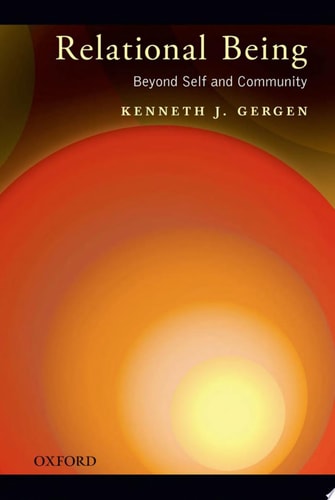
Relational Being: Beyond Self and Community
0
0
As an Amazon Associate and affiliate partner, Menrva Books earns from qualifying purchases. Learn more
Author Description
This book builds on two current developments in psychology scholarship and practice. The first centers on broad discontent with the individualist tradition in which the rational agent, or autonomous self, is considered the fundamental atom of social life. Critique of individualism spring not only from psychologists working in the academy, but also from communities of therapy and counseling. The second, and related development from which this work builds, is the search for alternatives to individualist understanding. Thus, therapists such as Steve Mitchell, along with feminists at the Stone Center, expand the psychoanalytic tradition to include a relational orientation to therapy.The present volume will give voice to the critique of individualism, but its major thrust is to develop and illustrate a far more radical and potentially exciting landscape of relational thought and practice that now exists. Most existing attempts to build a relational foundation remain committed to a residual form of individualist psychology. The present work carves out a space of understanding in which relational process stands prior to the very concept of the individual. More broadly, the book attempts to develop a thoroughgoing relational account of human activity. In doing so, Gergen reconstitutes 'the mind' as a manifestation of relationships and bears out these ideas in a range of everyday professional practices, including family therapy, collaborative classrooms, and organizational psychology.
Menrva's Summary
THE THESIS
Can human activity and the concept of the self be understood as products of relational processes rather than autonomous individual agency? Kenneth J. Gergen, a prominent social psychologist, challenges the traditional individualist framework that positions the rational agent as the fundamental unit of social life. By synthesizing developments in psychological scholarship and therapeutic practice, he argues for a radical shift toward a relational orientation where the mind itself is viewed as a manifestation of ongoing social interaction.
THE SCOPE MAP
What You Will Find
- A comprehensive critique of the individualist tradition in psychology and counseling.
- A theoretical framework that prioritizes relational process over individual autonomy.
- Applications of relational theory in family therapy, collaborative education, and organizational psychology.
- An exploration of how relational thought alters the understanding of human agency and social life.
THE AUTHORITY PERSPECTIVE
Scholars and practitioners in the field of social psychology frequently cite this work as a foundational text for understanding social constructionism and relational theory. Readers often note the academic density of the prose, which requires a strong background in psychological theory to fully grasp the author's arguments.
Page Count:
448
Publication Date:
2009-07-30
Publisher:
Oxford University Press
ISBN-10:
0195305388
ISBN-13:
9780195305388
Philosophy
Psychology
Non-Fiction
Psychology
Sociology
Self
Self Philosophy
Individualism