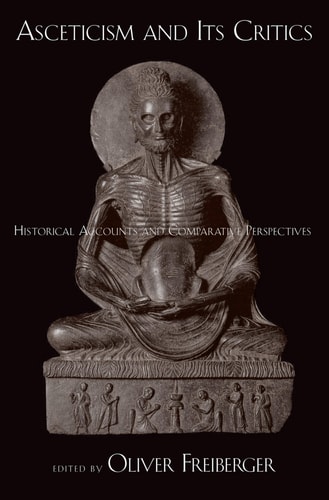
Asceticism and Its Critics: Historical Accounts and Comparative Perspectives
0
0
As an Amazon Associate and affiliate partner, Menrva Books earns from qualifying purchases. Learn more
Author Description
Scholars of religion have always been fascinated by asceticism. Some have even regarded this radical way of life-- the withdrawal from the world, combined with practices that seriously affect basic bodily needs, up to extreme forms of self-mortification --as the ultimate form of a true religious quest. This view is rooted in hagiographic descriptions of prominent ascetics and in other literary accounts that praise the ascetic life-style. Scholars have often overlooked, however, that in the history of religions ascetic beliefs and practices have also been strongly criticized, by followers of the same religious tradition as well as by outsiders. The respective sources provide sufficient evidence of such critical strands but surprisingly as yet no attempt has been made to analyze this criticism of asceticism systematically. This book is a first attempt of filling this gap. Ten studies present cases from both Asian and European traditions: classical and medieval Hinduism, early and contemporary Buddhism in South and East Asia, European antiquity, early and medieval Christianity, and 19th/20th century Aryan religion. Focusing on the critics of asceticism, their motives, their arguments, and the targets of their critique, these studies provide a broad range of issues for comparison. They suggest that the critique of asceticism is based on a worldview differing from and competing with the ascetic worldview, often in one and the same historical context. The book demonstrates that examining the critics of asceticism helps understand better the complexity of religious traditions and their cultural contexts. The comparative analysis, moreover, shows that the criticism of asceticism reflects a religious worldview as significant and widespread in the history of religions as asceticism itself is.
Menrva's Summary
THE THESIS
This book investigates the historical and systematic critique of asceticism within various religious traditions, challenging the assumption that self-mortification is universally regarded as the pinnacle of religious devotion. Oliver Freiberger, a scholar of religion, compiles ten distinct studies to analyze the motives, arguments, and targets of those who opposed ascetic practices. By examining sources from both Asian and European contexts, the author argues that the critique of asceticism is a significant, widespread, and competing worldview that is essential for understanding the complexity of religious history.
THE SCOPE MAP
What You Will Find
- Comparative analysis of asceticism across Hinduism, Buddhism, European antiquity, and Christianity.
- Examination of 19th and 20th-century Aryan religious critiques.
- Systematic categorization of arguments and motives used by critics of self-mortification.
- A framework for understanding how competing worldviews coexist within the same historical and religious contexts.
THE AUTHORITY PERSPECTIVE
Experts recognize this work as a significant contribution to religious studies for its focus on the often-overlooked counter-narratives to asceticism. Scholars frequently note that the text provides a necessary, systematic methodology for comparing diverse religious traditions and their internal debates.
Page Count:
268
Publication Date:
2006-10-19
Publisher:
Oxford University Press
ISBN-10:
0195307917
ISBN-13:
9780195307917
History
Philosophy
Religion
Asia religion
Europe
Social Life
Asceticism
Community Tags
Similar Books