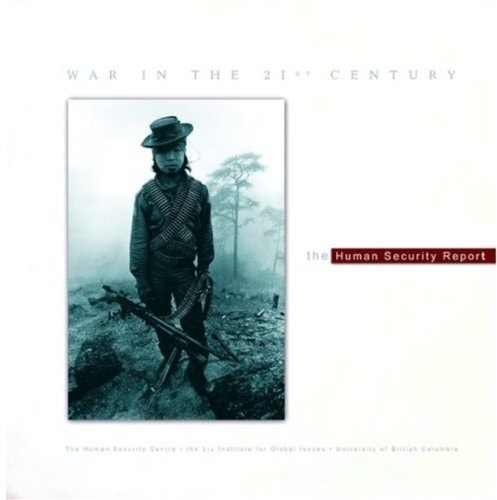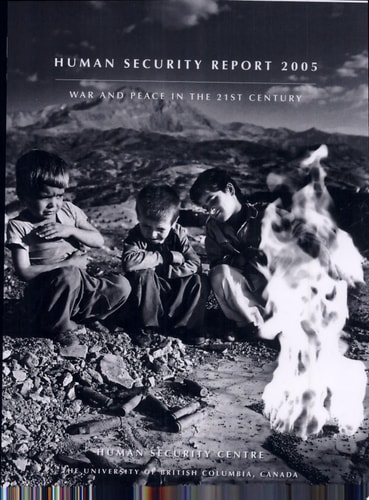
Human Security Report 2005: War and Peace in the 21st Century
0
0
As an Amazon Associate and affiliate partner, Menrva Books earns from qualifying purchases. Learn more
Author Description
Since the end of the Cold War, armed conflicts have increasingly taken place within, and not between, states. Boundaries between political and criminal violence are becoming increasingly blurred, while the very definition of "security" is undergoing radical change. Today, security is about the protection of communities and individuals from internal violence as well as the defense of borders against external threats. It is this focus--on the individual rather than the state--which distinguishes "human security" from "national security". National security is about protecting the state; human security is about protecting people. Both should be mutually reinforcing, but secure states do not necessarily mean secure citizens. During the last 100 years far more people have died at the hands of their own governments than have been killed by foreign armies. Despite the fact that more than 90% of armed conflicts now take place within, and not between, states, most governments and mainstream security research institutions continue to focus on national, as opposed to human, security. National security remains important, but in a world in which interstate war is the rare exception there is a need for a new and very different global security audit. The Human Security Report will address this need.Modeled on the UN's Human Development Report, the Human Security Report will provide an annual mapping of the incidence, intensity, causes, and consequences of global violence and policy responses to that violence. Each report will carry a series of essays focusing on a thematic issue. The theme of the first issue will be "War in the 21st Century". These essays will explore the emerging consensus about the causes of what is now being called the "New War" and the increasingly blurred distinction between criminal and political violence in many parts of the world. The UN, the World Bank, the OECD, the G7, and an increasing number of donor states now accept that understanding the root causes
Menrva's Summary
THE THESIS
This report investigates the shifting landscape of global violence by questioning whether traditional state-centric security models remain adequate for protecting individuals in the 21st century. The Human Security Centre utilizes extensive data sets to argue that the primary threat to human life has transitioned from interstate warfare to internal conflict and state-sponsored violence. By contrasting national security with human security, the authors establish a framework for evaluating global stability based on the safety of populations rather than the integrity of borders.
THE SCOPE MAP
What You Will Find
- Quantitative analysis of the incidence, intensity, and consequences of global violence.
- A comparative framework distinguishing between national security and human security paradigms.
- Examination of the blurred lines between political violence and criminal activity.
- Case studies and thematic essays addressing the nature of conflict in the post-Cold War era.
THE AUTHORITY PERSPECTIVE
Experts recognize this report as a foundational document for the human security field, frequently citing its data-driven approach to modern conflict. Readers often note the clinical, policy-oriented density of the prose, which serves as a standard reference for international relations researchers and government analysts.
Page Count:
170
Publication Date:
2006-01-26
Publisher:
Oxford University Press
ISBN-10:
0195307399
ISBN-13:
9780195307399
History
Armed Forces
International relations
Human rights
Sociology
Global Studies
Community Tags
Similar Books