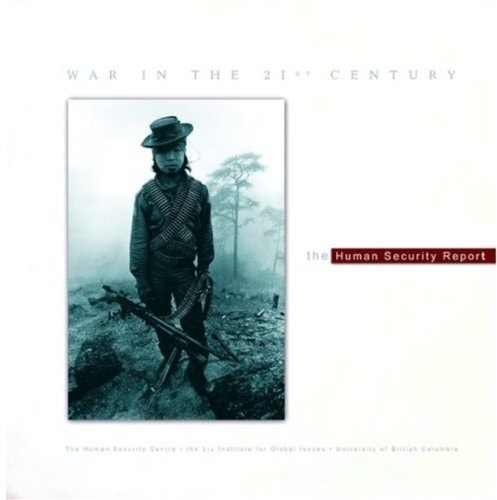
Human Security Report 2004
0
0
As an Amazon Associate and affiliate partner, Menrva Books earns from qualifying purchases. Learn more
Author Description
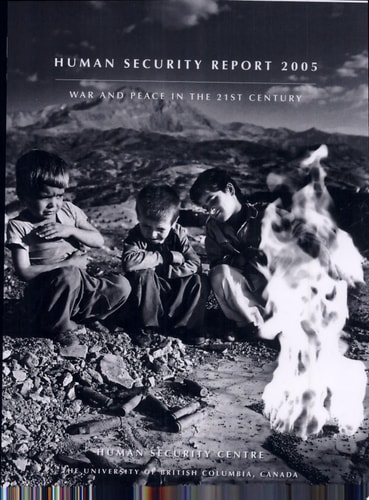
Since the end of the Cold War, armed conflicts have increasingly taken place within, and not between, states. Boundaries between political and criminal violence are becoming increasingly blurred, while the very definition of "security" is undergoing radical change. Today, security is about the protection of communities and individuals from internal violence as well as the defense of borders against external threats. It is this focus - on the individual rather than the state - which distinguishes "human security" from "national security". National security is about protecting the state; human security is about protecting people. Both should be mutually reinforcing, but secure states do not necessarily mean secure citizens. During the last 100 years far more people have died at the hands of their own governments than have been killed by foreign armies. Despite the fact that more than 90% of armed conflicts now take place within, and not between, states, most governments and mainstream security research institutions continue to focus on national, as opposed to human, security. National security remains important, but in a world in which interstate war is the rare exception there is a need for a new and very different global security audit. The Human Security Report will address this need. Modeled on the UN's Human Development Report, the Human Security Report will provide an annual mapping of the incidence, intensity, causes, and consequences of global violence and policy responses to that violence. Each report will carry a series of essays focusing on a thematic issue. The theme of the first issue will be "War in the 21st Century". These essays will explore the emerging consensus about the causes of what is now being called the "New War" and the increasingly blurred distinction between criminal and political violence in many parts of the world. The UN, the World Bank, the OECD, the G7, and an increasing number of donor states now accept that understanding the root cau
Menrva's Summary
THE THESIS
This report investigates the shift in global violence from interstate conflict to internal state-based violence, arguing for a transition from a national security framework to a human security paradigm. The Human Security Centre, an independent research body, utilizes extensive statistical data and policy analysis to challenge traditional security doctrines. By contrasting the protection of state borders with the protection of individual citizens, the report establishes a new methodology for auditing global stability and addressing the root causes of contemporary violence.
THE SCOPE MAP
What You Will Find
- Statistical mapping of the incidence, intensity, and consequences of global violence.
- Comparative analysis between national security and human security frameworks.
- Examination of the blurred lines between political and criminal violence.
- Thematic essays focusing on the nature of war in the 21st century.
THE AUTHORITY PERSPECTIVE
Experts and policymakers recognize this report as a foundational document for the human security movement, providing a necessary alternative to traditional military-centric security studies. Readers frequently note the report's clarity in presenting complex geopolitical data, making it a standard reference for researchers in international development and conflict resolution.
Page Count:
350
Publication Date:
2099-11-30
Publisher:
Oxford University Press
ISBN-10:
019517058X
ISBN-13:
9780195170580
Sociology
Global Studies
Human rights
International relations
Community Tags
Similar Books