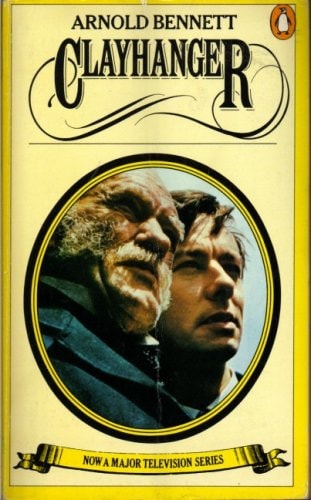
Clayhanger
0
0
As an Amazon Associate and affiliate partner, Menrva Books earns from qualifying purchases. Learn more
Author Description
Product Description This scarce antiquarian book is a facsimile reprint of the original. Due to its age, it may contain imperfections such as marks, notations, marginalia and flawed pages. Because we believe this work is culturally important, we have made it available as part of our commitment for protecting, preserving, and promoting the world's literature in affordable, high quality, modern editions that are true to the original work. Review Bennett writes magnificently of the little movements of the spirit in its daily routine.--Margaret Drabble About the Author Arnold Bennett is famous for his realistic novels about the Five Towns - the 'Five Towns' being the pottery towns of his youth. His virtuosity as a writer was his manner of depicting simple things and ordinary people in an intriguing way for the readers. He has a warm and kind understanding for his characters, particularly when describing the intricate details of their dreary routine lives. (Enoch) Arnold Bennett was born in Hanley, Staffordshire, in 1867. Arnold followed his father into the legal profession but at the age of 21, he decided to leave his father's firm and moved to London and worked as a solicitor's clerk. He won a literary competition in "Tit Bits" magazine in 1889 and in 1893 became assistant editor of the journal, Woman. He published his first essentially autobiographical novel The Man from the North in 1898. His best work is contained in his novels of the 'Five Towns' which include Anna of the Five Towns (1902), The Old Wives' Tale (1908), Clayhanger (1910), The Card (1911), Hilda Lessways (1911) and These Twain (1916). During the First World War, he became Director of Propaganda at the War Ministry. He refused a knighthood in 1918. In 1926, he began writing an influential weekly article on books for the Evening Standard newspaper.
Menrva's Summary
THE PULSE
Edwin Clayhanger, a young man in the industrial Five Towns, struggles to assert his personal ambitions against the rigid expectations of his domineering father. Edwin finds himself caught between the desire to pursue a career in architecture and the practical necessity of entering his father's printing business. The narrative follows his development from adolescence into adulthood within the soot-stained environment of the Staffordshire potteries. Bennett employs a meticulous, third-person perspective to examine the internal conflicts and social pressures that shape Edwin's identity. The story unfolds as a study of character growth constrained by the social and economic realities of late Victorian England.
INSIDE THE PAGES
- Detailed depiction of the industrial Five Towns setting
- Focus on the psychological interiority of the protagonist
- Exploration of generational conflict and familial duty
- Meticulous observation of daily routines and social customs
- Examination of the transition from Victorian to Edwardian values
- Slow-burn narrative pacing emphasizing character development
- Realistic portrayal of the printing trade and local commerce
- Integration of romantic tension as a catalyst for personal change
THE COLLECTIVE ECHO
Readers and critics frequently highlight Bennett's ability to elevate the mundane details of provincial life into a compelling narrative. Discussion often centers on the precision of his character studies, particularly how he captures the quiet frustrations of individuals living within rigid social structures. Many note that the pacing is deliberate, favoring deep psychological exploration over rapid plot progression. The atmospheric rendering of the Five Towns is consistently praised for its authenticity and historical weight. Readers often find that the strength of the work lies in its patient, observant approach to the complexities of human growth and compromise.
Page Count:
528
Publication Date:
1976-03-25
Publisher:
Penguin Books
ISBN-10:
0140009973
ISBN-13:
9780140009972
Fiction
British literature
classic
Realism
Historical
Coming of Age
Community Tags
Other Editions(11)

Creative Media Partners, LLC
2025
Default edition
Creative Media Partners, LLC
2022

Independently Published
2022

Amazon Digital Services LLC - KDP Print US
2019

CreateSpace Independent Publishing Platform
2018

CreateSpace Independent Publishing Platform
2018

CreateSpace Independent Publishing Platform
2016

Classic Books
2013

Classic Books
2001
Penguin Books
1976
W. Briggs
1919
Similar Books




Reader Comments
Share Your Thoughts
No comments yet. Be the first to share your thoughts!